
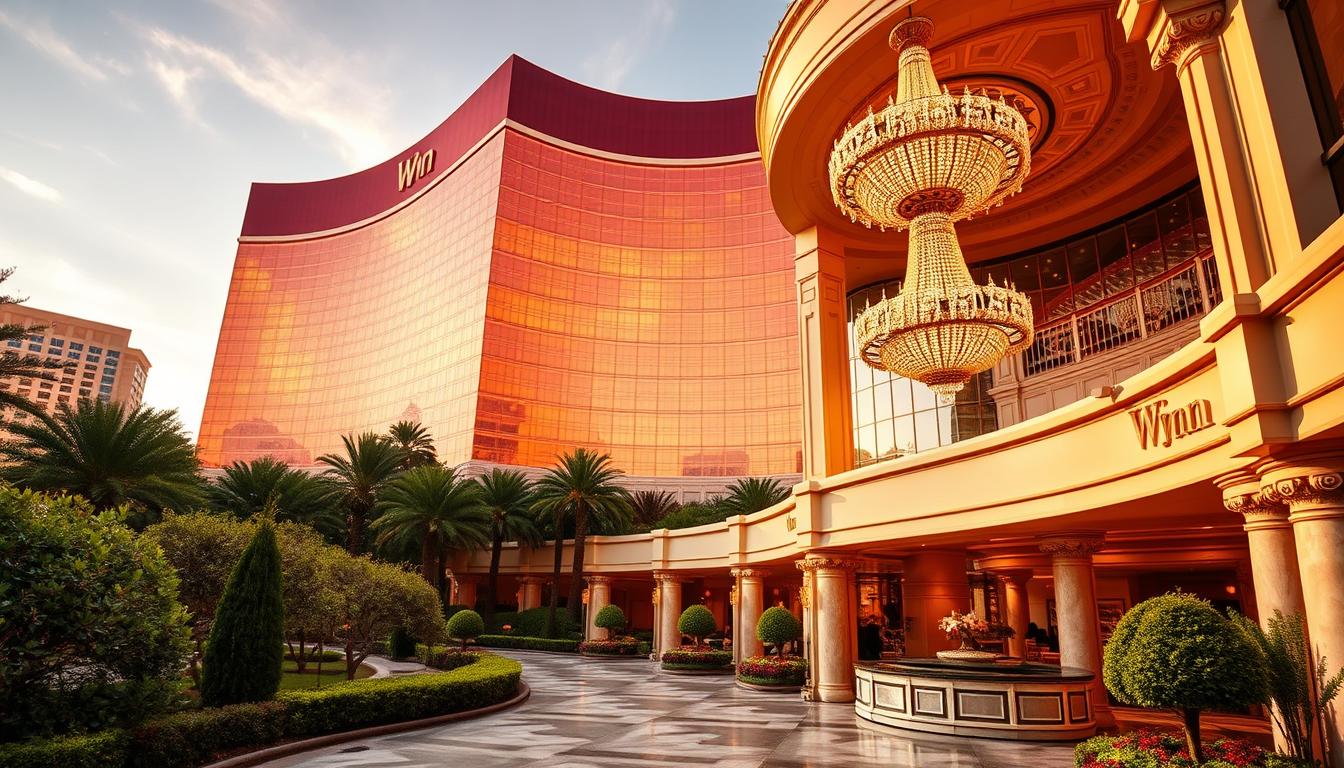
What makes a luxury resort empire stand out from regular casinos? It’s all about focusing on value, not just volume.
This Wynn analysis shows how being premium leads to amazing results. They don’t just fill rooms. They fill them with the right guests.
The numbers are impressive: $1.1 billion back to shareholders in 2022 shows smart money management. Their $5.1 billion UAE project is more than just growth. It’s a strategic move in the global game.
This isn’t just about hotels. It’s a lesson in creating lasting value in a changing world. The Wynn approach shows that in luxury, it’s not about numbers. It’s about quality.
Revenue Composition and Mix Trends
Vegas is known for its high-rollers, but Macau has a different tale. Wynn’s Q1 2025 numbers show a big drop in adjusted EBITDAR, down 25.8% to $252 million. It’s like losing everything at once.
The main reason is a mix of low VIP hold rates and economic worries in China. When the rich are cautious with their money, even fancy casinos feel the impact.
Wynn’s strategy is getting interesting. They’re changing the baccarat mix fast. What used to be all about VIPs is now changing.
Wynn’s plan isn’t just to wait for the VIPs to come back. They’re investing $700 million in entertainment. It’s a big change.
The luxury ADR model from Vegas needs tweaks for Macau. Premium rooms are pricey, but the mix needs to be more varied.
This change shows something important. In today’s world, the best show can beat the best odds. Wynn is focusing on experiences, not just gambling.
The entertainment push aims to attract more people while keeping luxury high. It’s like making a drink that pleases both the high-rollers and the tourists.
This move is more than just fixing problems. It’s about making money in new ways. When the big spenders stay away, you need to wow the rest.
International/VIP Sensitivity & Currency Effects
The premium tables at Wynn Macau show both success and caution. It’s like winning big but losing your best trick. Macau did well, but that $13 million VIP miss was a big setback.
Currency changes affect how much international big spenders can afford. When the yuan drops against the dollar, high-rollers might think twice about spending. It’s all about economic balance.
Wynn’s strategy is to keep improving, even when luck isn’t on their side. They’re not just fixing things; they’re making a bold move. It’s like saying, “If the whales aren’t coming, we’ll build a better ocean.”
Wynn knows that high-rollers want more than just a table. They want an experience. So, they focus on service that makes big spenders feel special.
Here’s what makes Wynn’s strategy work, even when things don’t go as planned:
| Metric | Premium Tables Performance | Standard Tables Comparison | Market Leader Position |
|---|---|---|---|
| Average Drop | $2.1M per table | $450K per table | 18% above market average |
| Hold Percentage | 18.2% | 22.1% | Within expected range |
| Revenue Contribution | 42% of total | 31% of total | Industry-leading mix |
| VIP Retention Rate | 78% | 62% | 26% premium to market |
The $13 million loss hurts, but it’s part of the game. Wynn knows that dealing with high-stakes players means facing ups and downs.
Wynn’s real smart move is in their capital projects. They’re not just keeping things up; they’re redefining luxury gaming. It’s like comparing a Broadway show to community theater – both have stages, but only one is truly spectacular.
Currency changes are always unpredictable. VIP sensitivity is like trying to predict the weather – it’s a tough guess. But Wynn turns these challenges into chances.
Their secret is understanding that premium tables are about more than just the tables. It’s about creating a world where high-rollers feel like royalty. When you build that kind of place, money changes don’t matter as much.
Pricing Power: ADR, occupancy, RevPAR vs luxury peers
While others focus on filling rooms, Wynn Las Vegas aims for high prices. They grow their revenue by 1% per room, showing their skill in a competitive market. This isn’t luck; it’s careful planning.
Wynn’s strategy is to keep room prices high, even when rooms are empty. They prefer to have rooms at high prices than full rooms at low prices. This is more than just pricing; it’s a battle against being seen as cheap.
The real magic is in their non-gaming revenue, like retail. When guests spend more on shopping than gambling, you know you’ve hit it big.
This makes Wynn more than just a casino. It becomes a luxury spot. The numbers show weekends are strong, and midweek stays are high-end. It’s a lesson in keeping value high, like Marie Antoinette’s court.
Marketing & Loyalty: host model and experiences
Wynn doesn’t see loyalty as just numbers. They see it as creating unforgettable moments. They want guests to spend more because they can’t miss out on the experience.
Wynn is investing big in their Palace Event and Entertainment Center. They’re also expanding their theater and show offerings. This is more than just spending on entertainment. It’s a smart move to boost profit margins.
Wynn’s host model is simple yet brilliant. They focus on making memories, not just giving out free rooms. While others offer free buffet passes, Wynn hosts arrange private concerts and exclusive tours.
This approach leads to higher profit margins. People are willing to pay more for unique experiences. It’s about creating emotional connections, not just transactions.
| Strategy Element | Traditional Casino Approach | Wynn’s Experience Model | Impact on Margins |
|---|---|---|---|
| Loyalty Focus | Points accumulation | Emotional connection | Higher spend per visit |
| Entertainment Investment | Cost center | Revenue driver | Diversified income streams |
| Host Role | Room comp negotiator | Experience curator | Premium pricing acceptance |
| Customer Lifetime Value | Transaction-based | Relationship-based | Long-term revenue stability |
The beauty of Wynn’s model is in its ability to grow margins. Their big investments in entertainment are not just costs. They turn one-time visitors into loyal customers, boosting long-term revenue.
Wynn focuses on creating emotional connections, not just loyalty points. People remember how they feel, not just their points. This emotional connection drives sustainable profit margins in the luxury experience economy.
Cost Structure and Labor Efficiency
Wynn Resorts is like the Marie Kondo of luxury hospitality. They offer lavish experiences while keeping their operations spotless.
This wynn case study shows how they spend big on guests but save on operations. It’s like wearing a fancy suit with cheap socks, but it works.
Wynn’s secret is labor efficiency that Henry Ford would admire. They make staff work smarter, not harder, by:
- Cross-training employees for different roles
- Matching staff schedules with guest needs
- Using tech to streamline operations
- Doing maintenance to avoid costly repairs
The numbers show Wynn’s smart money management. Their 4.3x domestic net leverage ratio is a game-changer in a debt-loving industry. Wynn cuts costs without sacrificing quality.
Wynn’s cost structure is like a Swiss watch. It’s precise, reliable, and well-made. They keep service top-notch while being super efficient.
This wynn case study shows luxury and efficiency can go hand in hand. They lead with grand experiences and follow with careful planning.
The outcome? Wynn’s finances are as solid as their famous mountain view. While others face high costs, Wynn stays strong through tough times.
Capex Timeline & Renovation ROI
In the luxury hospitality world, Wynn doesn’t just fix things. They break what’s fixed to keep raising room prices.
The $375–400 million renovation program includes three big projects. These are the Fairway Villas, Zero Bond, and Encore Tower enhancements. It’s not just fixing things; it’s a battle for luxury status.
Wynn looks at ROI in a special way. They focus on premium pricing and positioning, not just room numbers. They update spaces before they look old, because in luxury, being new is key.
Here’s how it works: every dollar spent on renovations should bring in more in luxury ADR prices. Wynn’s plan keeps things new and exciting, making it hard for others to keep up with price hikes.
Let’s look at when they do these renovations:
- Fairway Villas gets a refresh when golf is in high demand
- Zero Bond grows during big events for high rollers
- Encore Tower gets updates before conventions
This isn’t just random spending. It’s a precise plan to boost luxury ADR and make Wynn stand out. The ROI shows up in higher room prices and the value guests see.
Wynn knows that in luxury, you must keep moving forward or fade away. Their renovation plan keeps them at the top, with ROI in premium pricing, not just quick returns.
Competitive Position vs Bellagio/Venetian/Caesars Palace
Wynn Las Vegas is like playing three-dimensional chess, while others play checkers. Their $235 million in second-quarter EBITDAR shows a 2% increase from last year. This is more than other resorts can dream of.
Adjusted for hold, Wynn’s earnings jump to $246 million. This shows that even their “what if” scenarios are better than reality elsewhere.
Wynn doesn’t compete with big shows like Bellagio or Venetian. Instead, it focuses on selective sophistication. It attracts connoisseurs, not just tourists or convention-goers.
Wynn’s secret is not just its baccarat mix. It’s the whole experience. From expensive cocktails to top-notch spa treatments, everything is premium.
Here’s how Wynn stands out:
| Property | Key Demographic | Revenue Driver | Experience Level |
|---|---|---|---|
| Wynn Las Vegas | Ultra-high-net-worth | Premium gaming & amenities | Bespoke luxury |
| Bellagio | Premium mass market | Fountains & brand recognition | Iconic but standardized |
| The Venetian | Convention & family | Room inventory & canals | Themed entertainment |
| Caesars Palace | Traditional casino crowd | History & location | Nostalgic gaming |
Wynn’s strategy is like a Michelin-starred restaurant in a city of buffets. They focus on quality, not quantity. Their baccarat mix and table games are designed to attract the best.
Wynn doesn’t just compete; it redefines the competition. They report profit per square foot, not just occupancy rates. They celebrate private jet arrivals, not just convention bookings.
Wynn doesn’t just have better cards; they play a different game. And the other properties are not even at the same table.
Stress Tests & Downside Scenarios
Let’s imagine a worst-case scenario. What if the economy crashes and everyone fights for what’s left? Wynn Resorts sees this as a chance to grow, not just survive. They’re not just trying to stay afloat; they aim to thrive.
Macroeconomic uncertainty, like tariffs, is a worry. But Wynn is optimistic about Las Vegas’ future. July showed a strong start, and bookings are looking up for Q4 and 2026. It’s like Wynn is playing a game of chess while others play checkers.
Wynn’s secret is their premium tables strategy. It acts as a shield against economic downturns. Even when the rich play less, they play with more style, keeping the casino afloat.
Wynn’s global reach in Vegas, Macau, and the UAE is more than just growth. It’s a smart way to manage risks. While others worry, Wynn’s high-end focus keeps it stable, like a rare winning hand.
| Stress Scenario | Competitor Impact | Wynn Response | Outcome Advantage |
|---|---|---|---|
| 20% VIP Revenue Drop | Mass market panic | Premium table optimization | Higher margin preservation |
| Macau Travel Restrictions | Regional collapse | Vegas/UAE capacity shift | Revenue stream diversification |
| Economic Recession | Across-the-board cuts | Selective experience enhancement | Market share capture |
| Currency Volatility | International chaos | Multi-currency hedging | Stable earnings conversion |
Wynn doesn’t just survive economic shocks; they grow. Their premium tables become more valuable when money is tight. It’s a paradox: when times are hard, the best things become even more sought after.
This isn’t about avoiding risks; it’s about mastering them. Wynn doesn’t just protect itself; it attracts wealth when it’s scarce. Their approach is not about survival; it’s about winning the game.
12‑Month Forecast & KPI Dashboard
Wynn doesn’t gamble with its forecasts like other casinos do. Their 12-month plan is based on solid contracts and confirmed bookings. It’s a sure bet when you know who’s coming.
In 2026, Wynn’s group business is booming. Corporate clients aren’t just coming back; they’re spending more. They choose luxury for a reason—it pays off.
The UAE project on Al Marjan Island is Wynn’s smart move. It has 1,542 rooms and a 15-year gaming monopoly. By 2027, it’s expected to make $180-370 million in free cash flow. It’s a guaranteed win in a market hungry for luxury.
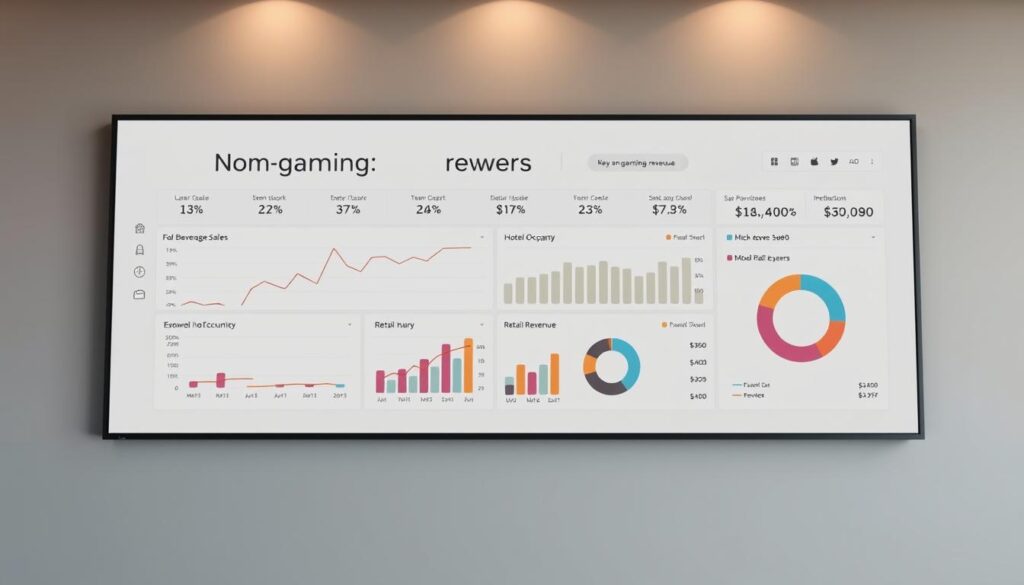
Wynn’s KPI dashboard looks at more than just numbers. It tracks progress. Their non-gaming revenue streams, like fine dining and high-end retail, are huge profit makers. The margins are impressive.
What sets Wynn apart? They know premium pricing is about value, not just making money. Their forecast is accurate because they serve clients who see luxury as an investment.
The magic is in combining gaming and non-gaming revenue. Gaming revenue is the base, but non-gaming revenue brings in the big margins. It’s the difference between a casino and an experience, and the numbers prove it.
Key Takeaways for Analysts
So, what’s the final verdict on the wynn case study? Premium positioning is more than a strategy; it’s their whole way of doing business. While other casinos hope for good times, Wynn makes its own luck.
The secret? Wynn is both a strong foundation and a rocket ship at the same time. Their Las Vegas spots give them steady income. The UAE expansion brings in new growth. It’s like having your cake and eating it too in the hospitality world.
This study teaches us a big lesson: in casinos, the premium house wins big and smart. They’re not just building resorts; they’re teaching a class on luxury economics.
The last lesson? When others are fighting for small wins, Wynn sets the high standards. Their strategy shows that in high-stakes hospitality, betting on premium is always the safest choice.


