
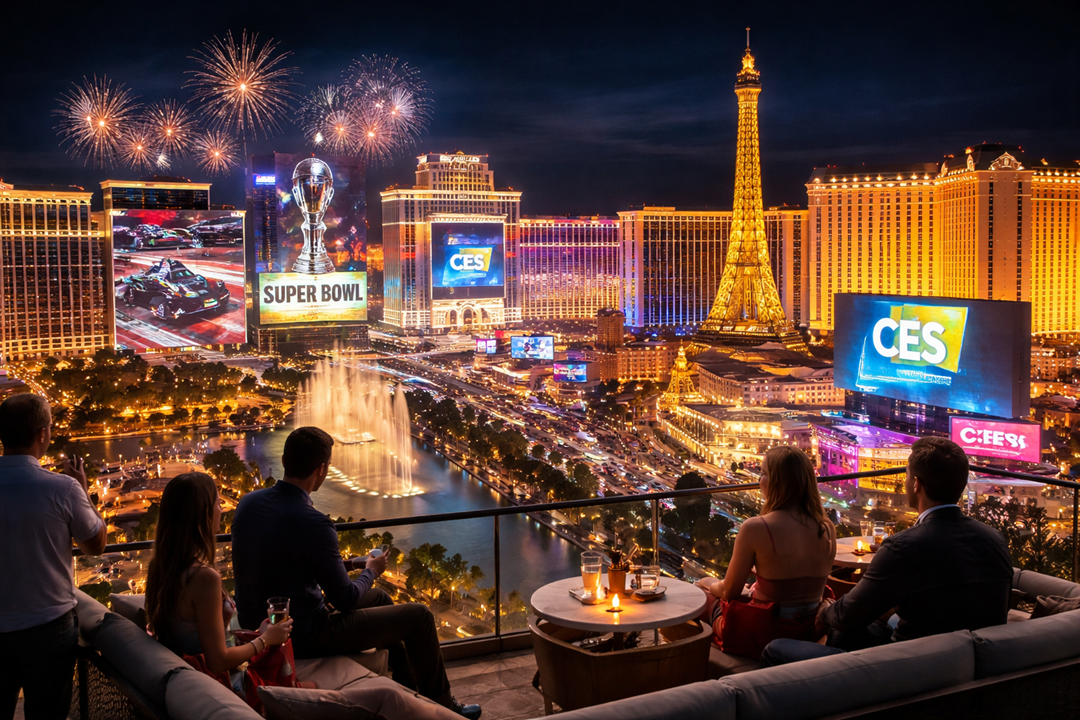
Las Vegas has always been event-driven. But in the modern Strip economy, mega-events are no longer promotional tools — they are financial instruments.
Formula 1, the Super Bowl, and global conventions such as CES don’t simply fill hotel rooms. They temporarily reprice the entire market. Average Daily Rate (ADR), gaming handle, food and beverage margins, and even retail performance shift dramatically within compressed windows.
The real question isn’t whether these events generate revenue spikes. They clearly do.
The question is whether those spikes translate into durable return on investment.
Short-Term Revenue Shock: Pricing Power on Display
When Formula 1 arrived in Las Vegas, the Strip experienced one of the most aggressive pricing surges in its history. Room rates multiplied. Minimum table bets rose. Premium inventory sold out months in advance.
This pattern repeats during Super Bowl week and flagship conventions:
- ADR surges well above baseline seasonal averages
- Occupancy approaches or reaches capacity
- Premium suites and high-limit gaming areas sell at record rates
- F&B and nightlife revenue accelerates
For operators, this creates an immediate margin lift. Unlike broad tourism growth, event-driven spikes often carry higher per-visitor spend and improved operating leverage.
Consider the revenue dynamic:
| Metric | Normal Peak Weekend | F1 / Super Bowl Weekend | % Lift |
|---|---|---|---|
| Average Daily Rate (ADR) | $280–$350 | $700–$1,200+ | 150–250% |
| Casino Floor Minimum Bets | Standard | 2–3x Increase | 100–200% |
| F&B Revenue Per Guest | Baseline | +40–60% | 40–60% |
| Luxury Suite Occupancy | 75–85% | Near 100% | Full Monetization |
In purely short-term financial terms, these events are extraordinarily profitable.
But that’s only half the story.
Gaming Revenue vs. Total Visitor Spend
One misconception is that mega-events primarily drive gaming revenue. In practice, the revenue mix becomes more diversified.
During large sporting and entertainment events:
- Sportsbook handle surges, particularly for NFL-related events
- Table game performance strengthens due to VIP presence
- Slot revenue may not rise proportionally
- Non-gaming revenue often outpaces gaming growth
This shift matters strategically. Las Vegas increasingly operates under the integrated resort model, where:
Gaming is one vertical within a broader entertainment ecosystem.
During Super Bowl week, for example:
- Sportsbooks become social hubs
- Viewing parties drive F&B packages
- Premium hospitality bundles include gaming credits
Similarly, Formula 1 transformed the Strip into a hospitality theater. Rooftop viewing decks, private race packages, and luxury dining experiences often generated margins comparable to — or exceeding — gaming floors.
The ROI calculus must therefore include:
- Incremental gaming revenue
- Non-gaming revenue multipliers
- Premium pricing sustainability
- Cross-property spending behavior
Convention Economics: The Quiet Revenue Engine
While global sporting events dominate headlines, mega-conventions may produce more stable long-term returns.
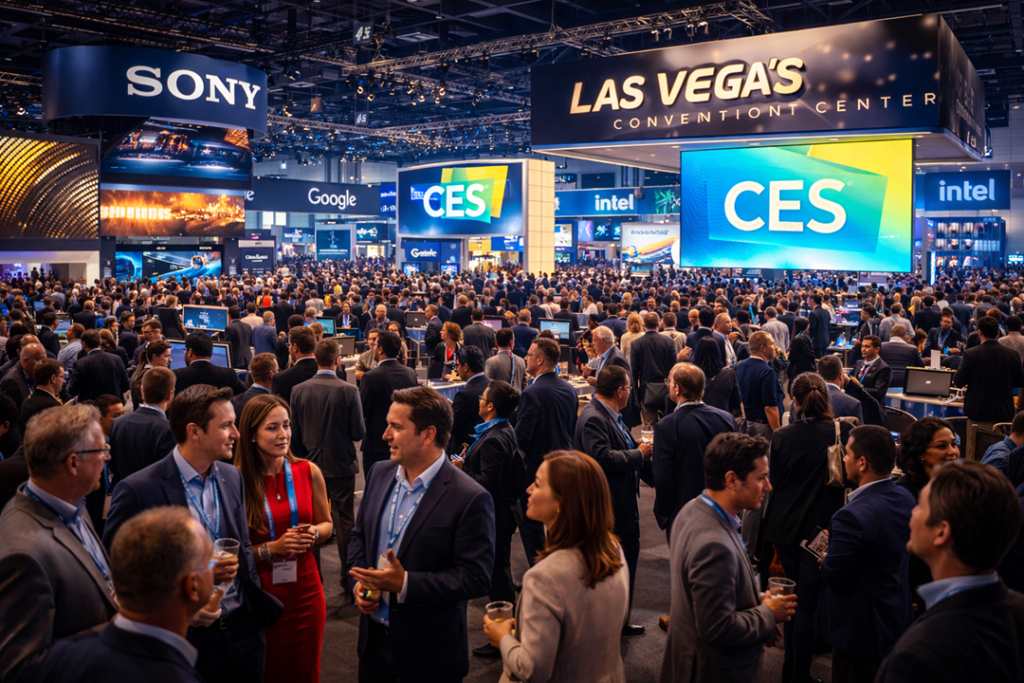
Events like CES, SEMA, and large corporate expos bring:
- Repeat annual visitation
- Corporate travel budgets
- Predictable room block bookings
- Midweek occupancy stabilization
Unlike F1 or the Super Bowl, conventions:
- Require less extraordinary infrastructure
- Deliver recurring annual revenue
- Smooth seasonal volatility
From a financial planning standpoint, conventions reduce revenue variability.
A simplified comparison:
| Event Type | Revenue Volatility | Recurrence | Infrastructure Cost | Brand Impact |
|---|---|---|---|---|
| Formula 1 | High | Annual (multi-year deal) | Extremely High | Global |
| Super Bowl | Very High | Rotational | Moderate | National |
| CES / Major Conventions | Moderate | Annual | Low–Moderate | Industry-Specific |
The ROI profile differs significantly.
- F1 delivers global exposure and extraordinary pricing power
- The Super Bowl delivers national spotlight and short-term sportsbook lift
- Conventions deliver dependable EBITDA stability
For investors and operators, stability often carries higher long-term valuation weight than volatility.
Infrastructure Costs and Capital Allocation
The most debated component of mega-event ROI is infrastructure.
Formula 1 required:
- Road modifications
- Temporary grandstands
- Disruption mitigation
- Extensive security and logistics coordination
These costs are not insignificant. Public-private funding structures further complicate evaluation.
To properly assess ROI, operators must analyze:
- Incremental revenue net of operational surge costs
- Infrastructure amortization over multi-year contracts
- Brand equity appreciation
- Future booking acceleration tied to global exposure
If F1 accelerates international luxury tourism for five subsequent years, its ROI extends beyond race weekend.
But if pricing normalizes and visitation reverts to baseline, returns compress quickly.
The Elasticity Question: Do Prices Stick?
A critical indicator of true ROI is post-event pricing behavior.
After a major event:
- Do ADR levels reset higher?
- Does international visitation increase permanently?
- Does premium suite demand normalize at elevated levels?
If the answer is yes, then mega-events act as structural repricing catalysts.
If no, they function as isolated revenue bursts.
Historical data suggests a mixed outcome:
- Post-Super Bowl pricing tends to revert
- Convention-driven demand produces steady ADR growth
- F1’s long-term elasticity impact remains under evaluation
The long-term metric to monitor is Revenue Per Available Room (RevPAR) trend acceleration over 24–36 months.
Sportsbook Economics: The Super Bowl Effect
The Super Bowl deserves separate attention due to sportsbook dynamics.
Sportsbooks experience:
- Record handle volumes
- Elevated in-play betting
- Increased prop wagering
- Cross-property foot traffic
However, sportsbooks typically operate on thinner margins than table games.
The ROI impact often depends on:
- Ancillary spend (F&B, rooms)
- VIP hospitality packages
- Long-term customer acquisition
If sportsbooks convert first-time bettors into recurring mobile users, lifetime value expands significantly beyond game day.
That conversion rate determines whether Super Bowl hosting creates durable value.
Risk Factors and Revenue Concentration
Mega-events introduce concentration risk.
Revenue compression occurs if:
- One event underperforms
- External factors (weather, logistics, macroeconomics) intervene
- Sponsorship economics shift
Las Vegas cannot rely solely on spectacle.
A diversified event calendar reduces exposure.
From a portfolio perspective, the optimal strategy combines:
- Recurring conventions
- Rotational national sporting events
- Long-term global partnerships (like F1)
- Organic tourism growth
Balanced exposure stabilizes annual revenue curves.
Measuring True ROI: A Multi-Layer Framework
To accurately measure ROI, operators should track five layers:
- Direct Incremental Revenue
- Incremental EBITDA Contribution
- Infrastructure Cost Amortization
- Brand Equity Lift (international awareness metrics)
- Post-Event Booking Momentum
A purely weekend-based revenue analysis underestimates impact.
True ROI spans years, not days.
The Bigger Picture: Events as Market Repositioning Tools
Mega-events serve another purpose beyond revenue spikes.
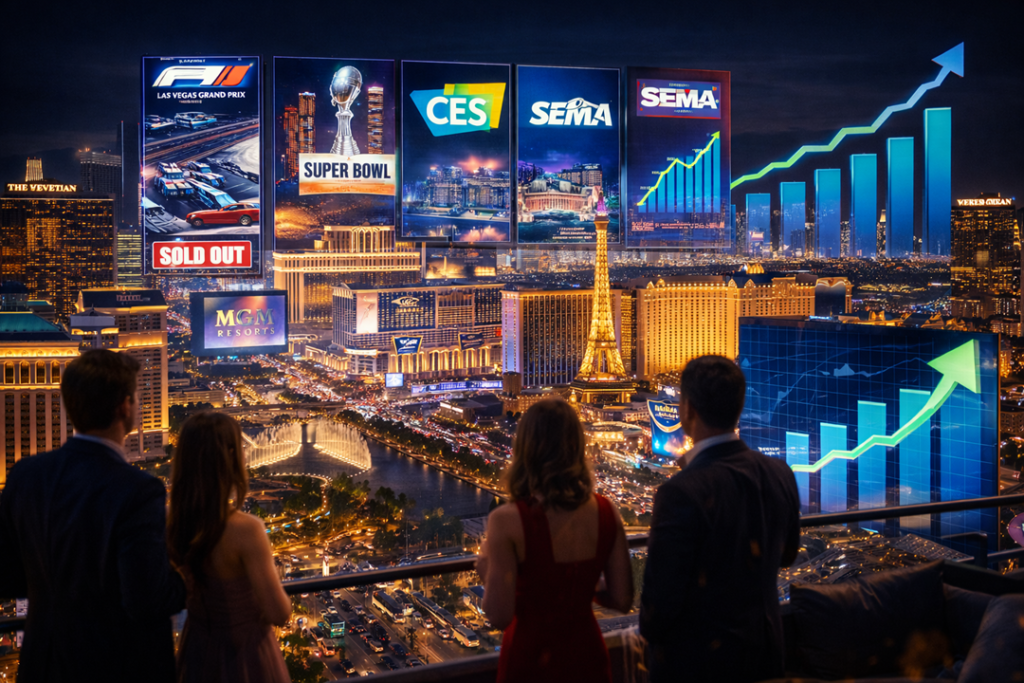
They reposition Las Vegas in the global hierarchy of entertainment cities.
Formula 1 placed the Strip in direct comparison with Monaco and Singapore. The Super Bowl reinforced its status as a premier sports destination. Major conventions sustain its reputation as a global business hub.
In capital markets terms, this influences:
- Investor perception
- Resort valuation multiples
- Future development appetite
The Strip is no longer just a gaming corridor. It is an adaptable event platform.
Spike or Structural Shift?
Event-driven revenue spikes are real. The financial lifts are measurable. ADR multiplies. Handle surges. Margins expand.
But the true ROI depends on what happens next.
If pricing power resets at higher baselines, if global visitation expands, and if repeat bookings accelerate, then mega-events act as structural growth catalysts.
If not, they remain high-profile but temporary revenue bursts.
For Las Vegas operators, the strategic objective is clear:
Turn spectacle into sustainability.
Because in the modern Strip economy, the weekend may generate headlines — but long-term positioning generates value.