
Welcome! Let’s explore a fascinating economic powerhouse. You might see a major UFC fight weekend as just a big sporting event. But, it’s actually a well-planned way to boost a city’s economy.
Imagine it like a blockbuster movie premiere. It doesn’t just sell tickets. It fills hotels, restaurants, and, most importantly, casinos for days.
Let’s look at some numbers. UFC 229, for example, made a huge impact. It brought in a whopping $86.4 million to Las Vegas. This event set a new record!
This isn’t a one-time thing. Events like WrestleMania or big boxing matches can make over $300 million for the host city.
So, how did the UFC and Las Vegas team up? It started with small fights and grew into a major financial center. The octagon is now more than just a sports stage.
Pre-Fight Week Analysis: Hotel Occupancy and Gaming Volume Buildup
Before the big fight, Las Vegas starts to buzz. The city doesn’t just turn on the lights on fight night. It slowly gets ready, and experts pay close attention. This pre-fight week is when the weekend’s economic story begins.
Hotel occupancy rates are key to predicting the future. For big UFC events, 90 to 96% of fans come from out of town. This means almost every single fan needs a place to stay. When booking patterns rise for Tuesday and Wednesday nights before a Saturday fight, casino bosses know a big wave of fans is coming. It’s not just a room sale; it’s a guaranteed customer already on property.
This early data helps casinos get ready for different types of customers. Are high-rollers booking suites? Are international fans arriving mid-week? The answers shape everything from staffing at high-limit tables to promotional offers. This early phase is a classic example of event-driven gaming, where entertainment draws in fans, and casino revenue follows.
The data shows fans’ dedication. For example, during UFC 229, one in five attendees stayed in Las Vegas for at least five days. They’re not just coming for the fight; they’re planning a full vacation. They have more time to explore, dine, and, importantly, play.
Why is mid-week hotel occupancy so important? Simple. A guest who checks in on Wednesday has three extra nights to spend. Their spending is spread out, leading to higher total revenue. By tracking this event-driven gaming buildup, resorts can forecast cash flow and plan better.
Understanding this buildup phase is key. It turns the Las Vegas entertainment impact from a one-night show into a multi-day economic powerhouse. By reading hotel and casino floor traffic early, the industry can get ready for the financial boost of the main event.
Fight Week Revenue Surge: Daily Gaming Performance During UFC Events
From the quiet morning after weigh-ins to the electric fight night, gaming revenue on the Strip follows a dramatic, predictable pattern. This isn’t just a busier weekend. It’s a finely tuned economic engine with its own daily heartbeat. Let’s walk through a typical day during a UFC fight weekend and see where the money moves.
The day after the official weigh-ins often starts surprisingly calm on the casino floor. Many fans are recovering from the hype of seeing the fighters face off. You might see lighter traffic at the slots and quieter table games. Think of this as the calm before the storm. The real action is building in sportsbooks, as final bets on the main and undercard fights are placed.
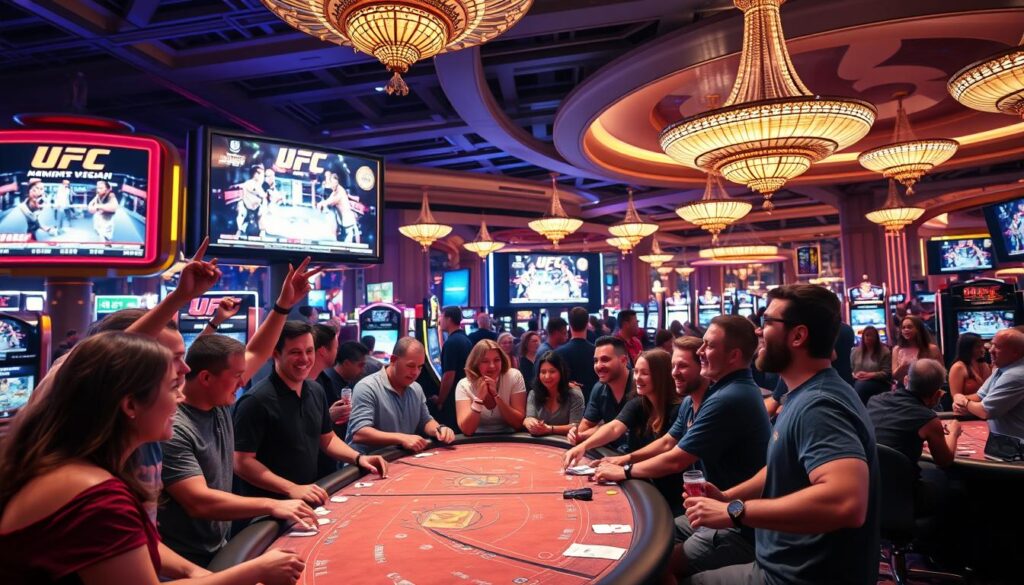
As fight day arrives, the energy shifts palpably. By afternoon, the casino buzz grows. Table games begin to fill up. Slot machine volume increases as fans, adorned in fighter merchandise, start their celebrations early. This build-up is steady and purposeful. The entire city is waiting for the main event.
Then, fight night hits. The atmosphere becomes electric. This is when daily gaming performance goes vertical. Sportsbooks are packed, with huge sums wagered in the final hours. When the main event starts, you can often hear a pin drop in the book as everyone watches.
But the real surge happens after the final bell. Winners celebrating and losers looking to change their luck flood the casino floor. Table games see a massive spike in action. High-limit slots get busy. This is where the data gets fascinating. Reports show that nearly 40% of attendees at major events like UFC 229 spent over $2,000 on non-gaming activities. This high disposable income directly fuels the post-fight gaming frenzy.
To truly understand this, we use special event analysis. This means we don’t just count more people; we study their behavior. A UFC fight weekend crowd is younger, more excitable, and here for a specific purpose. Their gaming is part of the experience, not the main attraction. This creates a different kind of revenue surge compared to a regular concert or holiday weekend.
The table below breaks down this unique daily cycle:
| Fight Weekend Phase | Casino Floor Vibe | Gaming Volume Peak | Primary Activity |
|---|---|---|---|
| Pre-Weigh-In (Wed/Thu) | Anticipatory | Low | Sportsbook Futures Bets |
| Weigh-In Day (Fri) | Building Hype | Medium | Social Gaming, Prop Bets |
| Fight Day Morning (Sat) | Subdued | Low-Medium | Recovery, Final Wagers |
| Fight Night (Sat Eve) | Electric, Packed | PEAK | Sportsbook Live Bets, Table Games |
| Post-Fight (Late Sat/Sun) | Celebratory/Commiseration | High | High-Stakes Tables & Slots |
This predictable pattern is a casino operator’s dream. They can staff according to the schedule and tailor promotions. The financial impact is monumental. Major events generate millions in visitor spending taxes alone for the city. Every roar from the T-Mobile Arena echoes as a cha-ching on the Strip.
So, the next time you see a UFC poster on the Strip, know you’re witnessing a masterclass in special event analysis. The fight is just the trigger for a powerful, daily wave of economic activity that washes over every casino, bar, and restaurant. The connection between the octagon and the casino floor has never been clearer.
Demographic Analysis: UFC Fan Gaming Preferences and Spending Patterns
The rise in gaming revenue is not by chance. It’s driven by a specific, valuable group with unique tastes. To grasp the essence of combat sports revenue, we must examine who’s spending. On the Las Vegas Strip during UFC events, this group is a goldmine for casinos.
Let’s dive into who attends UFC events. Data from major events shows us:
- Age: 50% of attendees are between 21 and 34 years old.
- Income: 50% report a household income of $100,000 or more.
- Origin: A significant 40% are international visitors.
This paints a vivid picture: a young, wealthy, and global fanbase. They come with money to spend and a desire for excitement. This isn’t just a tourist; it’s someone eager for a full experience.
So, what does this mean for casinos? Their game choices reflect their demographic. They prefer games that match the night’s energy.
Fast-paced slots and strategic table games like blackjack appeal to their competitive side. The lively atmosphere of craps mirrors the fight crowd’s camaraderie. This is event-driven gaming at its best—the thrill of the octagon in the game.
Their spending goes beyond the casino. They see the whole weekend as a luxury. Their income supports top hotels, fine dining, and exclusive nightlife. The gaming budget is just a part of their overall event spending.
When you combine these elements, it’s clear why UFC fans are so valuable. They boost combat sports revenue far beyond ticket prices. Their spending on gaming, luxury, and dining creates a revenue boom for the Strip. Resorts can tailor their offerings to this high-value crowd, making fight weekends a top destination. This knowledge is key to mastering event-driven gaming.
Venue Impact: T-Mobile Arena Events vs Off-Site Fight Viewing
Imagine Las Vegas with two economic engines on fight night. One is a big, central force, and the other is hundreds of smaller, buzzing spots. Where you watch the fight greatly affects the city’s earnings. Let’s explore this interesting dynamic.
A sold-out T-Mobile Arena event, like UFC 229 with 20,034 fans, is a big economic anchor. It draws thousands of fans into one area. This leads to a lot of spending on tickets, arena food, and nearby casino resorts. UFC President Dana White says Las Vegas’s resorts are perfect for these big events.
But what about fans who aren’t at the arena? They’re not just staying in their rooms. They’re filling sportsbooks, casino theaters, and bars all over the Strip. This “off-site” viewing creates a wide, spread-out Las Vegas entertainment impact. Instead of one big money spot, you get many smaller ones buzzing with activity.
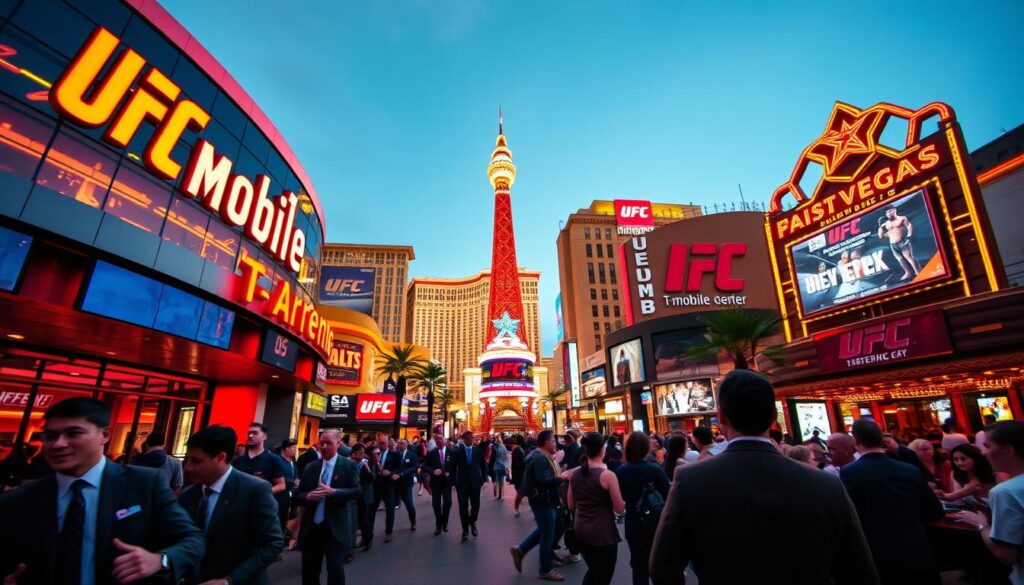
So, which way is better for gaming revenue? It depends on the type of spender. The arena draws fans who love the live event. They might gamble less that night because they spent a lot on the ticket. But, high-rollers are often in VIP sportsbook suites off-site. They can bet thousands while enjoying top service and big screens.
Through special event analysis, we can see the pros and cons. A big arena fight brings in a huge, predictable amount of money. The off-site model spreads risk and chance across the whole city. It makes every casino with a big screen a possible profit spot.
| Aspect | T-Mobile Arena Event | Off-Site Viewing |
|---|---|---|
| Revenue Concentration | Highly concentrated in one zone | Diffuse, spread across many venues |
| Primary Fan Activity | Live event experience | Social viewing & gambling |
| Gaming Activity Peak | Pre and post-fight | During the entire fight card |
| Secondary Spending | Arena merch, nearby dining | Casino drinks, in-sportsbook dining |
The real strength of Las Vegas is its ability to make money from fights in dozens of ways. Whether you’re in the arena or at a casino bar, you help the city’s economy boom. This two-way approach maximizes the Las Vegas entertainment impact for every big fight weekend.
Next time you plan a fight trip, think about your role in this system. Your choice of where to watch doesn’t just change your experience. It also fuels one of these powerful economic engines!
International Visitor Impact: Global UFC Fanbase and Tourism Revenue
Forget just a domestic audience; major UFC events turn the Las Vegas Strip into a bustling international hub. The energy you feel isn’t only from American fans. It’s a mix of accents, cultures, and passions from all over the world.
This international crowd doesn’t just come for a weekend. For many, a UFC fight weekend is a major holiday. They plan longer trips, often a week or more. This mindset shift is a game-changer for spending.
Let’s look at the numbers. They tell a powerful story about global draw. The data shows UFC leading other major combat sports in attracting visitors from overseas.
| Event | International Visitors | Estimated Tourism Impact |
|---|---|---|
| UFC 229 (Nurmagomedov vs. McGregor) | 40% | Very High. Long stays, premium hotel bookings, and significant luxury retail spending. |
| WrestleMania (WWE) | 22% | High. Strong package travel, but slightly shorter average stay than UFC. |
| Alvarez vs. Crawford (Boxing) | 10% | Moderate. Primarily domestic draw with focused event spending. |
| Key Insight | The UFC’s global brand and star power create a unique tourism multiplier, directly boosting combat sports revenue beyond the arena. | |
Why is the UFC’s international pull so strong? It’s built on worldwide superstars. Fighters like Conor McGregor or Israel Adesanya have massive followings in Europe, Australia, Africa, and beyond. Their fans save up to make the pilgrimage to Las Vegas.
This creates a powerful economic multiplier. Foreign currency flows into Nevada. Spending isn’t limited to tickets and bets. It extends to flight packages, multi-night luxury hotel suites, fine dining, and shopping.
You can see how this turns a sports event into a full tourism boom. The combat sports revenue from an international UFC fight weekend includes all this ancillary spending. It’s revenue that simply wouldn’t exist without that global fanbase.
So, when we talk about the UFC’s economic punch, remember it’s a worldwide effort. This international influx is the ultimate proof of the brand’s global strength. It elevates every event from a national spectacle to a must-see world destination.
Comparative Analysis: UFC vs Boxing vs Other Combat Sports Revenue Impact
Fight nights vary in their effect on Las Vegas casinos and hotels. A big boxing match, a UFC title fight, and a WWE event each affect the city’s economy differently. Let’s look at the numbers and who attends to see how they stack up.
Big boxing events, like the Alvarez vs. Crawford fight, are single-night spectacles that draw an older, richer crowd. These fans come, spend a lot on luxury suites and high-stakes games, and leave soon after the fight. The economic effect can be huge for that one night. The Alvarez-Crawford bout, for example, brought in a massive $304 million in total economic impact.
Now, let’s examine the UFC. A big event like UFC 229 (Khabib vs. McGregor) had a reported $86.4 million impact. This number is lower than the boxing event, but the story is different. UFC weekends are multi-day events. A younger, more diverse crowd comes early for weigh-ins, fan experiences, and parties. This spreads out the revenue over several days, creating a lasting buzz. This is a classic example of event-driven gaming that builds over time.
Then, there’s sports entertainment. WWE’s WrestleMania is more of a week-long festival than a fight. WrestleMania 41’s projected $322 million impact shows its huge appeal. It draws a broader, family-friendly audience that spends a lot on tickets, merchandise, and themed events. The economic activity is huge and diversifies the Las Vegas entertainment impact beyond just gaming.
So, what does this mean for casinos? Each sport offers a unique chance. Boxing gives concentrated, high-roller revenue. UFC offers a longer, youth-oriented engagement perfect for nightclubs and sportsbooks. WWE brings in a massive, cross-generational crowd that fills hotels and restaurants. The smartest resorts on the Strip know how to cater to all three.
| Event Type | Example Event | Reported Economic Impact | Key Audience Traits | Typical Duration |
|---|---|---|---|---|
| Boxing Mega-Fight | Alvarez vs. Crawford | $304 million | Older, wealthier, high-stakes focused | Primarily single night |
| UFC Championship | UFC 229 | $86.4 million | Younger, engaged, multi-day visitors | Full weekend buildup |
| WWE Spectacle | WrestleMania 41 | $322 million | Broad, family-friendly, entertainment-driven | Week-long festival |
This comparison isn’t about finding a winner. It’s about understanding strategy. For event-driven gaming to succeed, operators must recognize these patterns. A boxing weekend might mean focusing on VIP services and private gaming salons. A UFC event calls for packed sportsbooks and late-night venue partnerships. A WrestleMania requires family packages and non-gaming entertainment.
Las Vegas has mastered hosting this entire spectrum. By tailoring the experience to each sport’s unique fanbase, the city maximizes its overall Las Vegas entertainment impact. The next time you see a fight poster, you’ll see more than just athletes—you’ll see a complex economic engine ready to roar to life.
Ancillary Revenue: Food, Beverage, and Entertainment Spending During Fight Weekends
The casino floor is buzzing, but the real money is made in restaurants, clubs, and shows. This is called ancillary revenue. It’s as big as the gaming revenue.
A special event analysis of UFC 229 showed something amazing. Almost 40% of fans spent over $2,000 on things other than gambling. This money goes to food, drinks, and shows, creating jobs for thousands.
Businesses get ready for this money. Steakhouses offer special menus. Nightclubs have VIP tables named after fighters. Pool parties feature special DJs. Every place tries to capture the excitement of the crowd.
This spending creates jobs for many. Chefs, servers, bartenders, and more get paid when you buy something. It’s the true community impact of a big fight weekend.
A UFC fight weekend is more than just a fight. Fans come for a full Las Vegas experience. The city’s top-notch options keep the revenue high.
To understand the full picture, let’s look at where the money goes. The table below shows where the money flows and how businesses adapt.
| Spending Category | Estimated Avg. Spend Per Attendee* | Common Business Adaptations | Key Revenue Drivers |
|---|---|---|---|
| Fine Dining & Restaurants | $300 – $700 | Special fight weekend menus, extended hours, required reservations. | High-end steak & seafood, premium wine lists. |
| Nightlife & Clubs | $400 – $1,500+ | Fighter-themed VIP packages, guest appearances, elevated cover charges. | Bottle service, reserved tables, celebrity hosts. |
| Entertainment & Shows | $100 – $400 | Added late-night performances, fight-related comedy or magic acts. | Ticket sales, merchandise at the venue. |
| Retail & Merchandise | $50 – $300 | Pop-up UFC shops, exclusive event apparel, limited-edition gear. | Official UFC merchandise, luxury brand collaborations. |
*Estimates based on industry data and event analysis. High-spender groups significantly increase averages.
The financial impact is deep. A proper special event analysis must count every dollar spent. It’s the fight, food, and fun that make a UFC fight weekend so profitable for Las Vegas. When planning an event, remember to think about the whole experience.
Post-Fight Analysis: Extended Stay Patterns and Revenue Decay
The final bell rings, but for Las Vegas casinos, the economic battle is just starting. We call this phase the revenue decay curve. It’s when visitor spending slowly drops as fans head home. But here’s the exciting part: this decline isn’t sudden. For many fans, the fun—and spending—lasts for days.
Think of it like the echo of a big cheer. The main event is over, but the excitement keeps going. Data from big events like UFC 229 shows a remarkable 20% of attendees stayed in Las Vegas for at least five days. That’s not just a weekend trip; it’s a full vacation built around the fight.
What does this mean for combat sports revenue? It has a longer shelf life than one night. These extended stays mean more action on the casino floor, more restaurant reservations, and more shopping. The economic impact stretches thin, providing value long after the champion’s hand is raised.
International visitors are often the key drivers here. For a fan flying in from London or Sydney, it makes sense to turn a UFC ticket into a week-long Las Vegas experience. This pattern is gold for resorts. It smooths out the typical post-event crash and turns a peak into a profitable plateau.
So, how do smart casinos manage this event-driven gaming tail? They don’t just hope fans stick around; they actively encourage it. Here are a few tactics you’ll see in play:
- Post-Fight Promotions: Special slot tournaments or table game bonuses valid only in the days following the event.
- Extended Hotel Deals: Discounted room rates for additional nights to incentivize longer stays.
- Partnered Experiences: Bundling tickets to other shows or attractions with the fight weekend package.
Let’s visualize a typical revenue decay curve for a major UFC weekend. This table shows how different revenue streams behave in the days following the fight:
| Days After Main Event | Casino Gaming Volume | Hotel Occupancy | Key Fan Activity |
|---|---|---|---|
| Day 1 (Sunday) | High (Recap parties, lingering buzz) | Very High (Check-out day for many) | Brunch, pool time, final bets |
| Days 2-3 (Mon-Tue) | Moderate (Core extended-stay fans) | Moderate (20-30% extended stay group) | Sightseeing, relaxed gaming, fine dining |
| Day 4+ (Wed onward) | Returns to baseline | Returns to baseline | Departures, normal tourist flow resumes |
Understanding this curve is key for operations. It tells a resort when to schedule extra staff and when to wind down. More importantly, it reveals a huge opportunity. By crafting offers that target the “Days 2-3” crowd, casinos can effectively flatten the decay curve and boost total event-driven gaming yield.
The lesson is clear: the true value of a major fight isn’t just on fight night. A big part of combat sports revenue is captured in the quiet days that follow. By planning for the entire visitor journey—from the weigh-ins to the farewell brunch—Las Vegas properties can maximize the financial impact of every single event. Now that’s a winning strategy!
Annual UFC Schedule: Planning Around 12+ Events and Revenue Optimization
Looking at the full calendar shows the city’s strategy. Las Vegas hosts over a dozen UFC events each year. It’s not just a series of weekends. It’s a detailed plan for the city’s economy.
Casinos and hotels plan ahead using the UFC schedule. They adjust their marketing, staff levels, and room rates for these busy times. This way, every fight night becomes a chance to make money.
UFC President Dana White explains why it works. He says Las Vegas is perfect for big shows because of its great resorts. The city has everything needed to make the most of each event.
This planning turns one-time spikes into a steady income. Analyzing one fight helps plan for the next twelve. By spreading out big events, the Strip keeps weekends busy all year.
This steady activity is what makes Las Vegas special. It’s not just one big night. It’s a year-round boost from mixed martial arts.
Smart planning between the UFC and resorts makes every fight valuable. This partnership keeps Las Vegas as the Fight Capital of the World. Understanding this cycle shows how fight nights boost the economy.