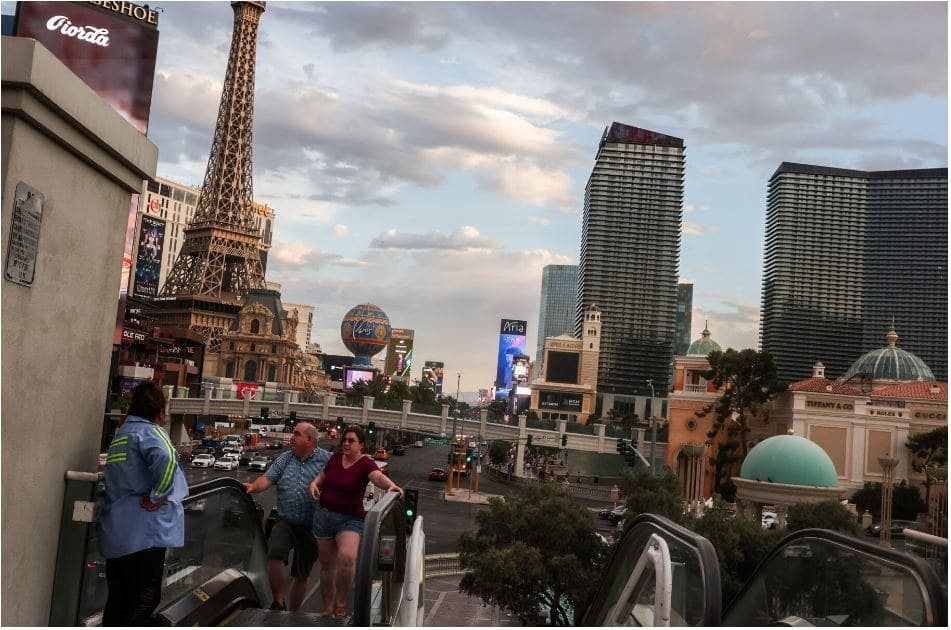
For generations, the economic engine of Las Vegas was driven almost entirely by the casino floor. The traditional business model was simple: offer highly subsidized rooms, cheap buffets, and free entertainment to funnel as many guests as possible toward the slot machines and table games. Today, that model has been completely inverted. As the global hospitality industry evolves, the Las Vegas Strip has transformed into a diversified entertainment ecosystem where non-gaming revenue—comprising hotel rooms, dining, nightlife, and arena events—substantially eclipses traditional gambling income.
This economic paradigm shift is not a sudden accident, but rather the result of decades of deliberate strategic pivots by major resort operators like MGM Resorts International, Caesars Entertainment, and Wynn Resorts. By analyzing current Las Vegas gaming revenue trends, it becomes abundantly clear that while the casino floor remains a highly profitable anchor, the true growth vector for the modern integrated resort lies far beyond the baccarat tables and slot banks.
The Historical Pivot to the Integrated Resort
The transition away from a pure-play gaming economy began in the late 1980s and 1990s with the advent of the modern mega-resort, championed by visionaries like Steve Wynn. The opening of The Mirage in 1989 proved that a property could draw millions of visitors through high-end attractions, retail, and luxury accommodations, rather than just gambling.
However, the acceleration of this trend over the last decade has been unprecedented. As regional gaming expanded across the United States—with nearly every state offering some form of legalized casino or sports betting—Las Vegas lost its monopoly on convenience gambling. To maintain its status as a premier global destination, the city had to offer experiences that could not be replicated at a regional riverboat or a neighborhood tribal casino.
Today, according to historical data from the Nevada Gaming Control Board, non-gaming revenue routinely accounts for 65% to 75% of total net revenue for major Las Vegas Strip properties. The casino floor is no longer the sole subsidizer of the resort experience; rather, every department is expected to operate as a standalone profit center.

Entertainment as the Primary Driver of Visitation
The most visible catalyst in the modern Las Vegas economy is the city’s aggressive acquisition of world-class entertainment and professional sports. The city is no longer just a weekend getaway for gamblers; it has become the sports and entertainment capital of the world. This transition brings a radically different demographic of high-spending visitors to the Strip.
The inauguration of Allegiant Stadium in 2020 and the arrival of the NFL’s Las Vegas Raiders fundamentally altered the city’s weekend hotel demand curve. Events like Super Bowl LVIII in February 2024 generated massive economic impact, driving unparalleled average daily room rates (ADR) across the valley. Furthermore, the debut of the MSG Sphere in 2023 introduced a revolutionary live music venue that commands premium ticket prices and drives luxury hospitality packages.
The Formula 1 Las Vegas Grand Prix, which debuted in November 2023, exemplifies this non-gaming focus. The event transformed the Strip into a global racing circuit, drawing international high-net-worth individuals who spent lavishly on hospitality suites, fine dining, and VIP experiences. While these visitors certainly gambled, their primary expenditure was directed toward event access and luxury accommodations, reinforcing the strategy of using macro-events to drive non-gaming margins.
The Premiumization of Hospitality and Dining
As the focus shifted away from the casino floor, operators recognized the massive revenue potential in premium hospitality. The era of the $1.99 midnight steak dinner is long gone, replaced by Michelin-starred chef residencies, exclusive omakase rooms, and sprawling culinary halls.
Food and beverage (F&B) operations are now massive revenue engines. Resort operators partner with global hospitality brands to create dining experiences that draw visitors purely for the culinary aspect. High-end nightclubs and dayclubs operate with astonishing profit margins, often generating tens of millions of dollars in annual revenue through VIP table service and bottle sales.
Simultaneously, the hotel side of the business has embraced strict yield management. The Las Vegas Convention and Visitors Authority consistently reports strong occupancy rates, but more importantly, ADR and Revenue Per Available Room (RevPAR) have reached historic highs. Resorts utilize dynamic pricing algorithms, adjusting room rates by the hour based on demand driven by conventions, concerts, and sporting events. Instead of giving away rooms to low-tier gamblers, operators are successfully selling them at a premium to affluent event-goers.

| Revenue Category | Historical Strip Share (Approx. 1990) | Modern Strip Share (Approx. Current) | Primary Growth Drivers |
| Casino / Gaming | 60% – 65% | 25% – 35% | High-limit Baccarat, progressive slots |
| Hotel / Rooms | 15% – 20% | 25% – 30% | Dynamic pricing, luxury suites, macro-events |
| Food & Beverage | 10% – 15% | 20% – 25% | Celebrity chefs, premium nightlife, dayclubs |
| Entertainment & Retail | 5% – 10% | 15% – 20% | Residencies, arena sports, luxury boutiques |
Gaming Revenue’s Changing Role in the Ecosystem
It is crucial to understand that the declining percentage of gaming revenue does not equate to a decline in actual gaming dollars. In fact, Nevada continues to set annual records for total gaming win, frequently surpassing the $15 billion mark statewide, with the Las Vegas Strip generating the lion’s share of that total.
However, the function of the casino has changed. Rather than being the sole focus, the casino floor acts as a high-margin complementary engine. The modern casino is heavily optimized. Operators rely on sophisticated data analytics and loyalty programs to identify and reward the most profitable players, while efficiently managing the floor mix between table games and slot machines.
Slot machines continue to provide reliable, low-overhead revenue, while high-limit table games—particularly baccarat—introduce significant volatility but massive upside, heavily influenced by international VIPs. The integration of technology, such as electronic table games and cashless wagering systems, has further streamlined casino operations, reducing labor costs and increasing the overall profitability of the gaming department.
Future-Proofing the Integrated Resort Model
Looking ahead, Las Vegas resort operators are doubling down on the diversified model. The economic resilience of the Strip relies on maintaining a balanced portfolio of revenue streams that can weather fluctuations in any single sector. If international baccarat play softens, a robust convention calendar and sold-out arena events can bridge the gap.
To future-proof their assets, operators are prioritizing several key development areas:
- Immersive Entertainment Venues: Investing in tech-forward performance spaces that offer experiences unavailable on mobile devices or home theaters.
- Convention Space Expansion: Building state-of-the-art meeting facilities to secure reliable, mid-week corporate group business, which historically drives high F&B and room spend.
- Luxury Retail Partnerships: Expanding high-end retail promenades that cater to the affluent international tourist demographic.
- Wellness and Experiential Hospitality: Developing massive spa complexes, wellness retreats, and curated luxury experiences to capture the rapidly growing wellness tourism market.
The economic reality of the modern Las Vegas Strip is defined by adaptation. By recognizing that the contemporary traveler demands more than just a slot machine, Las Vegas has successfully engineered an economic model that thrives on diverse, premium experiences. As long as the city continues to innovate its non-gaming offerings, it will secure its position not just as a gambling hub, but as the unrivaled epicenter of global entertainment and hospitality.