

Las Vegas is not just about bright lights and big bets anymore. It’s making a huge bet on its economy. Imagine Ocean’s 11 meets a detailed plan for rebuilding. The Strip’s comeback story involves tough talks, smart hiring, and busy construction sites. But will this big risk pay off?
The Henry Fund says the casino industry could grow by 4.95% each year until 2029. But Turner & Townsend’s data shows a different challenge. Today, casinos are fighting for skilled labor and supply chain flexibility. And it’s getting expensive to build, with costs rivaling those of luxury items.
After the pandemic, HR teams have become like pit bosses. They’re using new tech to manage schedules and meet union needs. Supply managers are playing a game of 3D chess with material shortages. It’s no longer just about fun and games; it’s about survival.
In the next five years, success will depend on smart decisions based on data. Can the old guard of Las Vegas outsmart the newcomers with their tech skills? The outcome is far from certain.
Labor Force Metrics & Trends
Every slot machine win relies on a tight labor market. Vegas casinos face a staffing paradox like a movie plot. They must prepare for 93% occupancy with labor costs at 27.9% of revenue. It’s like planning a heist where the goal is to steal paychecks, not cash.
| Metric | 2023 Figure | Industry Impact |
|---|---|---|
| Hotel Occupancy | 83.5% | Pre-pandemic levels |
| Labor Cost/Revenue | 27.9% | Up 18% from 2019 |
| ADR Growth | 11.9% | Outpaces wage increases |
The real challenge is keeping 83.5% occupancy while ADR forecasts rise. Dealers are not just shuffling cards; they’re negotiating health benefits. Finding cocktail waitresses is as hard as finding a $5 blackjack table at 3 AM.
HR departments are now like improvisational theater teams. They face three big challenges:
- Visitation forecasts that swing wildly
- Union contracts that require big concessions
- Tech investments that can’t replace human charm
When you see a dealer smile through a long shift, remember it’s not just training. It’s the hard work of people in an industry where labor trends change fast.
Wage Pressure and Union Deals
Vegas dealers are now more than just card shufflers. They’re playing a big role in labor economics. The Culinary Union’s 2023 talks led to a 32% wage increase for 60,000 workers. This boost came from the profits of sports betting.
Cocktail servers now make $75k a year. Junior analysts earn $55k. It’s a big win for workers, showing that labor can change the game.

- Sportsbook profits bankrolling union demands (hello, 24% revenue growth)
- MGM’s $15M Oracle HCM system tracking productivity down to the second
- Caesars’ autonomous beverage carts circling like vultures at the buffet line
In Vegas, the wage game is a high-stakes chess match. Wynn pays its human concierges $68k. But Caesars is replacing 15% of its beverage staff with robots. They’ve also introduced app-based parking, making $22/hour valet jobs obsolete.
But is this wage increase sustainable? Sports betting margins are funding these raises, but they might soon be at risk. When the music stops, will companies keep their union deals or turn to automation? The competitor benchmarking Vegas scene is now filled with sci-fi elements, like AI bartenders and blackjack machines.
Supply Chain Risk (Imports, Tech, Construction)
Vegas’ supply chain is like a Jenga tower. Pull the wrong part, and a $2B resort can fall. From RFID chips to marble flooring, each item must arrive quickly. Three industries—imports, tech, and construction—are in a constant race.
Caesars’ HVAC problem shows even smart systems can fail with global shortages. Their Oracle SCM update cut costs by 19.1%. But, engineers were left to work in 115°F heat. Why? Vegas needs more than just parts.
- Slot machine semiconductors must arrive before their software is outdated.
- French pastry chefs need to clear customs before brunch.
- Construction crews must install robots while pouring concrete.
The table below shows how supply chain upgrades meet reality:
| Metric | Pre-Oracle SCM | Post-Oracle SCM |
|---|---|---|
| Lead Time Variance | ±14 days | ±3 days |
| Tech Obsolescence Rate | 22% | 9% |
| Construction Delays | 47 incidents/month | 18 incidents/month |
New gaming tech adds to these risks. Sourcing holographic dealers is tough when Taiwan’s chip factories are busy. Resorts now stockpile items like doomsday preppers. They store VR headsets with frozen lobster tails. In Vegas, a grand opening can turn into a $300M loss in just three days and one missing customs form.
CapEx Implications
Forget poker chips—the real bets are on cloud analytics and esports arenas. Las Vegas operators aren’t just renovating properties; they’re playing Monopoly: Tech Edition. The $150M average casino refresh now includes more microchips than blackjack tables. Why? Because investors want ROI that outpaces inflation’s relentless slot machine.
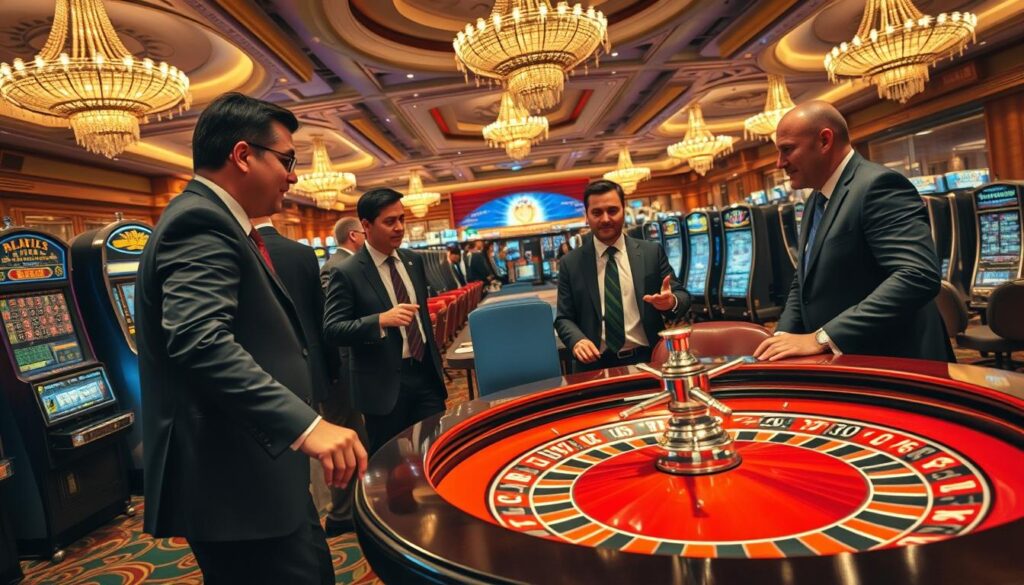
MGM’s Push Gaming acquisition proves the point. They spent less buying an entire gaming software company than most properties budget for marble flooring. Wynn’s $300M esports arena now generates more foot traffic than their baccarat rooms. Think about that: Gen Z gamers outspending high rollers by 2:1 on concessions alone.
Three strategic shifts define today’s casino M&A and portfolio shifts:
- Tech over tiles: Oracle Cloud’s analytics tools delivered 37% ROI for table games—better than any chandelier investment
- Experiences over expansions: Convention space? Passé. Interactive VR lounges? Priceless
- Vertical integration: Why rent slot machines when you can own the software that powers them?
The math’s brutal but clear. A $50M restaurant remodel might boost revenue 8%—but the same investment in AI-driven loyalty programs could lift retention 22%. Operators aren’t just updating decor; they’re rewriting the entire house advantage. Think those Cirque du Soleil theaters are safe bets?
Long-Term Cost Trends
Las Vegas casinos are finding that going green is a big win. Before the pandemic, costs were growing slowly, just enough to keep up with rising food prices. Now, costs are rising by 4.95% each year, making green investments a high-risk, high-reward game. The big win? High ESG scores that impress even tech giants like Elon Musk.
Think about this: Boyd Gaming spends $4.2 million a year on laundry. That money could power:
- 3 microgrids to cut energy use by 40%
- Desert-friendly landscaping for 8 properties
- AI water systems to save 650M gallons a year
Caesars is all in on green. Their green investments now outdo VIP club deposits. MGM’s 31.3 ESG risk score shows they’re betting big on sustainability. The numbers show that every dollar spent on green projects brings back $1.30 in tax breaks and brand value by 2026.
Water-saving efforts show the real benefits. Casinos with smart irrigation systems cut utility costs by 22% last year. That’s enough to fund two Cirque du Soleil shows or one Elon Musk Twitter rebrand. As one GM said: “Our whiskey profits now go to solar panels, not parking lot fountains.”
The big question is: Can Vegas turn green into profit? Early signs say yes, and the house always wins when it runs on clean energy.
Responses and Mitigation
When Nevada’s gaming regulators roll the dice on blockchain, casinos either double down or fold. The digital gaming forecast isn’t just about flashy tech—it’s a survival playbook. Golden Nugget turned cocktail napkin doodles into NFT collectibles, showing even bar tab receipts can become digital gold. Resorts World’s augmented reality poker tables are real, aiming to cut $12M in dealer costs by 2025.
But, every byte of innovation comes with a 22% cybersecurity tax. Want blockchain blackjack? That’ll be one ransomware insurance policy, please.
- Cloud-first infrastructure: 76% of casino CEOs now funnel chips into cloud tech—because who needs physical servers when you can host blackjack in the stratosphere?
- AR/VR immersion: Online gaming’s 14.55% annual growth isn’t from grandma playing slots. It’s Gen Z betting in metaverse casinos wearing VR headsets.
- Regulatory jiu-jitsu: When the Gaming Commission greenlights crypto bets, smart operators turn compliance costs into marketing gold. “Fully blockchain-compliant poker” sounds better than “we spent millions on lawyer bots.”
But let’s not romanticize the grind. That shiny new AI cocktail waiter? It requires 300% more code audits than a human bartender. The regulatory change vegas gaming faces isn’t just paperwork—it’s a full-scale rewire of legacy systems. Caesars’ IT department now spends more time decrypting compliance docs than actual malware.
Yet here’s the twist: early adopters are cleaning up. Stations Casino’s cloud migration cut data breach risks by 41% last quarter—proving sometimes the safest bet is going all-in on the future.
The real question? Whether Vegas can out-innovate its own legend. Because when your competition includes holographic Elvis dealers and Bitcoin roulette wheels, resting on analog laurels isn’t just risky—it’s financial seppuku. Place your bets.
Conclusion
Las Vegas is at a digital crossroads. One path leads to Detroit’s old factories, the other to Amazon’s cloud campuses. The future of work in Vegas depends on this choice: can dealers become data experts? Can slot machines fund quantum labs?
Henry Fund predicts a big leap by 2029, with DraftKings’ stock soaring 210%. This shows digital investments are more valuable than old-school riches.
The future of Vegas casinos isn’t just about games. It’s about using smart tech to stay ahead. By merging Oracle’s AI with PwC’s models, casinos can outdo their rivals. But they also need to keep the magic alive, like Cirque du Soleil meets Nvidia Omniverse.
Workforce needs to balance human touch with tech. It’s about combining unionized charm with algorithmic efficiency.
Construction cranes and server racks now show Vegas’ growth. Risks have shifted from shipping delays to GPU shortages. The real win is in upskilling dealers, turning them into cloud architects without protests.
Vegas can evolve into a modern playground or a lesson in holding onto the past. We bet on the hybrid approach.