

U.S. online casino revenue reached $1.01 billion in operator-gross revenue across the seven legal online casino states in July 2026, up about 15.7% from July 2025, according to the American Gaming Association’s revenue tracker. That figure is a market signal, not a celebration of player losses. For operators, regulators, and users, the sharper question is what kind of product experience is producing that scale: reliable apps, clear payment flows, usable game lobbies, and rules that players can understand before they deposit.
The $1 billion level also needs context. July 2026 was not described in the research as a one-off spike. The Weekender reported that it was the fifth month in the first seven months of 2026 in which iGaming revenue exceeded $1 billion, and it also cited Michigan’s July iGaming revenue at $302.8 million before deductions and about $290.6 million after deductions, with year-over-year growth of at least 20% for eight months or more in its July revenue analysis. That pattern suggests repeatable demand in regulated states, but it does not prove that every operator is building a better user experience.
Why Online Casino Revenue Cleared $1 Billion
Online Casino Revenue And Monthly Scale
The most useful interpretation of July 2026 is not that the market crossed a headline number. It is that monthly iGaming scale has become more consistent in the states where full online casino gaming is legal. A $1.01 billion month, especially when it follows multiple other billion-dollar months during the same January-to-July period, points to a product category that has moved beyond early adoption in its approved jurisdictions.
That said, online casino revenue is a gross operator measure. It is not the same as profit, consumer benefit, or product quality. Revenue can rise because more users are active, because existing users are spending more time in apps, because promotional costs are high, because game availability has expanded, or because payment and account systems have become easier to use. Public monthly revenue figures do not isolate those causes.
| July 2026 Signal | Reported Figure | Analytical Read |
|---|---|---|
| U.S. iGaming operator-gross revenue | $1.01 billion | Large regulated-state scale, not national availability |
| Year-over-year movement | About 15.7% higher than July 2025 | Growth remained positive despite a larger base |
| Monthly pattern | Fifth billion-dollar month in first seven months of 2026 | Suggests recurring demand, not just a single event month |
For competitive analysis, that distinction matters. Operators that rely mainly on bonus spend may report revenue gains, but they can also train users to chase offers instead of choosing a platform for clarity and dependability. Operators with cleaner onboarding, fewer cashier errors, faster identity checks, and stable mobile performance are better positioned to keep users without escalating promotions.
What The Revenue Mix Says About Platform Behavior
Mobile UX And Payment Friction
The user story behind online casino revenue starts before a wager. Registration, geolocation, identity verification, funding, withdrawal requests, and responsible-gaming settings all shape whether a player trusts an app. A large July 2026 revenue figure implies that many users are willing to complete those steps in regulated states. It does not tell us whether they found the process fair, fast, or easy to understand.
Cashier design deserves close attention. If deposits are simple but withdrawals are slow, unclear, or burdened by late document requests, users may see the platform as one-sided. A trustworthy operator should make withdrawal timing, payment eligibility, identity checks, and account review triggers easy to find. Those details matter more for long-term brand strength than a flashy promotion on the home screen.
Mobile performance also matters because most iGaming sessions are app-based or mobile-web based. Public revenue reports do not rank apps by crash rates or load times, so analysts should avoid claiming that the highest-revenue operator has the best app. The safer read is that high-volume markets punish weak usability over time. Confusing lobbies, unstable live-dealer streams, delayed game launches, or failed geolocation checks can push users toward competitors that feel more predictable.
Games, Poker, And Menu Design
The July 2026 data in the provided research does not break revenue into slots, table games, live dealer, or poker. That limit should be stated plainly. Without official game-category detail, any claim that one category drove the $1.01 billion month would be speculative.
Still, game presentation is central to the experience. Users need filters that distinguish slots from table games, live-dealer content, video poker, and poker rooms where available. Poker is especially sensitive to liquidity, scheduling, and clear tournament rules. For those interested in poker’s digital evolution, insights can be gathered through poker video game coverage, although regulated real-money app analysis still depends on operator terms and state rules.
A better lobby is not just prettier. It should reduce mistaken clicks, show game rules clearly, identify software providers where relevant, and make return-to-player information accessible when required or available. Those features do not remove gambling risk, but they support informed use.
State Concentration And Regulatory Caution
Legal Access Is Still State By State
The July 2026 milestone covered seven legal online casino states. It should not be read as evidence that online casino gaming is legal across the United States. Availability remains jurisdiction-specific, and licensed apps are expected to verify location. Any platform that implies users can bypass location rules should be treated as a trust risk.
For regulators, the scale of online casino revenue raises practical questions. Higher volume means more account disputes, more payment reviews, more responsible-gaming interventions, and more pressure on auditing systems. It also means that public reporting quality matters. Clear monthly state reports help analysts separate durable growth from short-lived promotional surges.
For operators, state-by-state compliance is not just a legal cost. It is part of the product. A user in a legal state should be able to understand why a location check failed, why a withdrawal is under review, or why a game is unavailable. Vague error messages create friction and can weaken trust even when the operator is following the rules.
Michigan As A Scale Marker
Michigan’s July 2026 result is one of the clearest examples in the research set because it reported both a pre-deduction and post-deduction figure. That distinction matters for analysts who compare markets. A headline gross figure can show consumer activity and operator scale, while after-deduction figures may better reflect the revenue base used in local reporting or tax calculations, depending on the state framework.
Michigan’s continued year-over-year growth of at least 20% for eight months or more also suggests that mature regulated states may still have room to expand. That does not mean growth will continue at the same pace. As markets mature, operators may face higher acquisition costs, tighter promotional returns, and more scrutiny of account safety and responsible-gaming tools.
User Trust Pressures Behind The Milestone
Bonuses Need Plain Mechanics
Revenue growth can tempt operators to push more aggressive acquisition offers. A user-protective review should look past the headline and check the mechanics: wagering requirements, eligible games, minimum deposit rules, expiration dates, withdrawal limits, max bet restrictions while a bonus is active, and whether bonus funds can be declined.
No exact bonus value should be treated as reliable unless it comes from current official operator terms. In a high-growth market, old landing pages and affiliate pages can fall out of date quickly. The safer user habit is to read the terms inside the licensed app or on the operator’s official site before opting in.
Protection And Security Are Part Of Retention
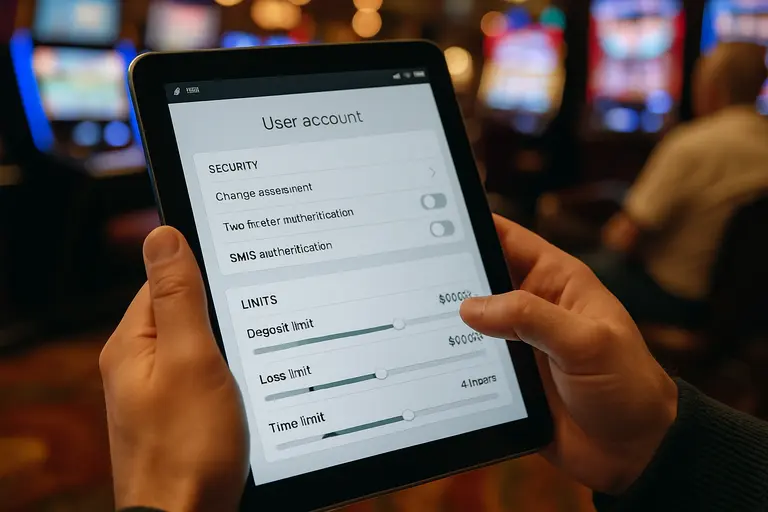
Security is not only about encryption language on a footer. It includes identity checks, fraud monitoring, account recovery, payment review, session controls, and clear routes to close or restrict an account. A platform that makes deposits easy but makes limit-setting hard is not aligned with a trust-first product model.
Responsible-gaming tools should be visible before a user is in distress. Deposit limits, time-outs, self-exclusion links, and reality checks need plain placement in the account area. Stronger revenue numbers increase the need for stronger safeguards, not weaker ones. This is also where market analysis should remain cautious: growth in operator revenue does not tell us whether harm is rising, falling, or being addressed well. Those questions require separate data from regulators, health agencies, and responsible-gaming programs.
For readers comparing this market signal with earlier site coverage, our analysis of the July 2026 iGaming milestone focused on similar questions: scale, trust, and whether the product experience can keep pace with revenue growth.
What July 2026 Says About Online Casino Revenue
A Revenue Milestone Is Not A User Verdict
July 2026 showed that regulated iGaming can produce billion-dollar monthly revenue in the United States under the current state-by-state model. It also showed that online casino revenue has moved into a scale band where small product flaws can affect a large number of users. Slow withdrawals, unclear bonus terms, weak account messaging, or unreliable geolocation are not minor annoyances at this size. They become competitive and regulatory issues.
The cautious read is that the market is strong but still uneven. The $1.01 billion figure is supported by reported data, yet it does not answer every question that matters to users. A sound platform review should ask whether the app explains rules clearly, pays approved withdrawals in a reasonable process, protects accounts, supports limit-setting, and follows state availability rules without encouraging workarounds.
For casino operators, July 2026 should be read as pressure to improve product quality, not permission to rely on heavier promotion. For regulators, it is a reminder that public data, complaint handling, and consumer safeguards need to keep pace with market scale. For users, the practical lesson is simple: choose licensed platforms only where legal, read the terms before accepting offers, and judge an app by its full account experience, not by a revenue headline.