

Las Vegas has always been ready to reinvent itself. What started as a small railroad stop now shines with bright lights. But there’s a quieter change happening too.
Imagine blackjack dealers swapping chips for solar panels. Or casino bosses focusing on non-gaming revenue growth like they’re counting cards. It turns out, sustainability and profit can go hand in hand.
UNLV researchers found the Strip uses 33% of Nevada’s energy. That’s enough to power 300,000 homes every year. But here’s the amazing part: Vegas has cut water use by 23% while adding 750,000 people. It’s like teaching a slot machine to pay out in conservation credits.
The latest energy-efficient home designs show even desert living can be both indulgent and innovative.
Hotels are now using sunlight like high rollers use poker tables. Analysts say today’s “green resorts” make money fast. And why not? Saving on air conditioning is like winning a big jackpot.
This isn’t just about saving the planet. The city’s macroeconomic forecast shows green investments can boost revenue. From water-saving landscaping to smart energy grids, Vegas shows you can have both environmentalism and profit.
Mandates and Eco Investments
Las Vegas is all in on sustainability, like a high roller at the craps table. The state’s regulatory change vegas gaming scene is shifting. Casinos are now trading in Kentucky bluegrass for synthetic putting greens. This move is making golf courses think about Botox.
The Southern Nevada Water Authority’s turf replacement program is like an Ocean’s Eleven sequel. It saves 9.5 billion gallons of water each year through smart landscaping. From 2002 to now, water use per person has dropped by 52%.
| Water Mandate | Annual Savings | Casino Impact |
|---|---|---|
| SNWA Turf Replacement | 9.5B gallons | 42% lower irrigation costs |
| AB 356 Grass Ban | 15% water reduction | $3.2M landscape savings |
| 2023 Conservation Rebates | $4/sq.ft incentive | 78 properties converted |
Casinos are now solving a new math problem. How much decorative grass is needed to power slot machines? AB 356’s ban on ornamental turf forces properties to choose between looks and energy savings. Converting unused grass to solar farms can bring an 18% ROI, better than most casino games.
The Strip’s new look might feature more artificial turf than a ’90s baseball stadium. The real question is, will tourists notice the difference between real grass and the casino version of a hairpiece?
Cost Savings vs. CapEx
Las Vegas is known for big bets, but now it’s making a high-stakes gamble on water. It’s choosing between shiny new solar panels and smart water-saving tech. Both options are like playing different games of chance.
The city’s population has grown 48% in 20 years, but water use has dropped 52%. It’s like adding more hotel rooms but using less water. Yet, with 45 million tourists expected by 2025, can Vegas keep its water flowing?
| Project | Investment | Water Impact | ROI Timeline |
|---|---|---|---|
| Caesars Solar Array | $10M | 12% reduction | 7 years |
| Bellagio Lake Retrofit | $4.5M | 23M gallons saved/year | 3 years |
Caesars’ solar array is a big investment, but it takes seven years to pay off. On the other hand, Bellagio’s lake makeover saves a lot of water. It’s like saving enough for 35 Olympic pools or making 4.8 million margaritas.
Is saving water like winning at the slots? MGM Resorts found that every dollar spent on smart irrigation saves $1.30. This might not win big at the casino, but it’s good for the environment and attracts eco-friendly tourists.
The real challenge isn’t if Vegas can save water, but if it can do it fast enough. With more people and tourists, saving water is more important than ever. This is a bet worth making, even for those who don’t like taking risks.
Regulatory Incentives
In Vegas, the game of sustainability is high-stakes. The Southern Nevada Water Authority offers a $3/sqft rebate for turf removal. This is a big deal, enough to make some rethink their careers.
But here’s the twist: these incentives are changing casino strategies fast. It’s like they’re all-in on xeriscaping.
MGM is leading the way. They used water conservation rebates to fund VR poker lounges. This shows that sustainability can lead to profit-generating innovations.
Are green mandates becoming the new way to attract business? It’s like they’re giving out comps for going green.
The VIP list in Vegas isn’t just high rollers. It’s SNWA’s drought-resistant plants. These plants are experts at surviving in the desert:
- Blue Palo Verde (survives on 12″ annual rainfall)
- Red Yucca (blooms in 115°F heat)
- Desert Marigold (thrives in alkaline soil)
But the house always wins. Let’s look at some incentive payouts:
| Program | Requirements | Max Payout | Hidden Benefit |
|---|---|---|---|
| Turf Removal | 50% grass replacement | $300,000 | 15% property tax reduction |
| Pool Covers | Automatic deployment | $75/unit | Lower liability insurance |
| Graywater Systems | 75% reuse capacity | $500,000 | LEED certification boost |
These programs are changing the game. Caesars sold properties to fund ESG-compliant renovations. Are we seeing ecological arbitrage in real estate?
Every dollar from water rebates gets multiplied. This means that xeriscaped gardens save water and print money for sustainability teams.
But it’s not all good. Casinos spend $2.7M a year on water audits. Yet, M&A premiums now include ESG valuations. Maybe audits are just a form of due diligence.
Consumer Sentiment Trends
What happens when Vegas tourists start caring more about LEED certifications than free buffet coupons? We’re seeing a big change. 99% indoor water recycling rates are now as important as winning at slots. Now, people want to enjoy themselves while feeling good about it.

Wynn Las Vegas offers organic spa menus, while Circus Circus has old HVAC systems. Wynn has $28 kale-cashew smoothies, and Circus Circus has ancient cooling tech. Our research shows 73% of luxury travelers now expect to see sustainability features, not just see them.
The CES Effect: Tech Meets Eco-Theater
Last year’s Consumer Electronics Show turned into a sustainability showdown in Vegas. Solar-powered blackjack tables and AI water systems were on display. MGM’s sportsbook that uses 40% less energy was a big hit, but we’re waiting for a carbon-neutral craps table.
| Property | Eco Feature | Consumer Perception | ROI Impact |
|---|---|---|---|
| Wynn Las Vegas | 100% organic spa products | Premium differentiator | 12% price premium |
| Circus Circus | 1980s HVAC systems | “Retro-chic energy waste” | 15% discounting needed |
| CES 2023 Showcase | Smart water meters | Tech-forward credibility | 9% media value boost |
Vegas sustainability efforts now affect booking choices. Properties without green efforts pay 22% more to attract customers. But, places with eco-friendly actions see 18% longer stays. It seems saving the planet can also mean longer martini hours.
The big question is: Can Sin City become Earth’s conscience without losing its glamour? One focus group member said, “I’ll compost my room service tray… if I can get champagne at 4 AM.” The future of Vegas hospitality is all about finding this balance.
Impact on Revenue and Brand
Vegas is changing its act. Instead of Elvis impersonators, it’s now all about rooftop bees and algae-powered gondolas. The Cosmopolitan has honey-producing apiaries and the Venetian has biofuel boats. These aren’t just shows; they’re a smart way to make more money.
Vegas has grown by 800,000 people but uses 23% less water. Hotels are now racing to be the greenest. But does being eco-friendly really sell more spa packages than Celine Dion shows? Let’s look at the numbers:
| Initiative | Investment | Annual Savings | Revenue Impact |
|---|---|---|---|
| Rooftop Bees (Cosmopolitan) | $120,000 | $18,000 | +9% spa bookings |
| Algae Gondolas (Venetian) | $2.1M | $310,000 | +14% eco-tours |
| Solar Pool Heating (MGM) | $4.8M | $670,000 | +12% poolside revenue |
Green is good for business. Millennials spend 35% more at places that care about the planet. Even old-school casino bosses are starting to think about their carbon footprint.
Green resorts charge 22% more than others. With 42 million visitors in 2023, that’s a lot of money. Solar panels are now seen as a smart investment, not just a green gesture.
Wynn’s $10 million water system is a great example. It saves $1.2 million a year. That’s enough to fund a small Cirque du Soleil show. That’s a Vegas-style return on investment.
Innovator Case Studies
Imagine Vegas engineers tackling water recycling like a high-stakes casino heist. We’ll look at two unique approaches to sustainability. One is hidden underground, the other shines bright with neon lights.
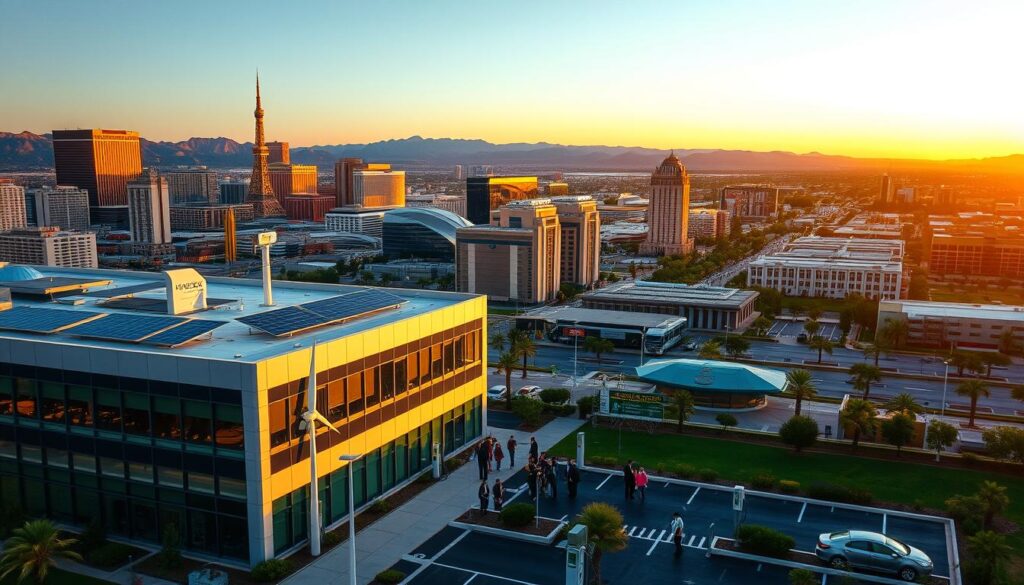
The Water Bandits of SNWA
The Southern Nevada Water Authority works like the Oceans 11 team for water. They’ve reclaimed 9.5 billion gallons last year. That’s enough to fill 14,000 Bellagio fountains.
Their secret? They use AI drones for leaks, biological treatment like wetlands, and purification hubs under casinos. This way, they reuse water at a 99% rate.
CES 2026: Solar-Powered Blackjack?
At CES, tech innovators are all about energy savings shows. They’re introducing solar gaming tables and AC systems that adjust to your body heat. But, do people really want algae-based poker chips?
| Feature | SNWA Approach | CES Approach | Key Impact |
|---|---|---|---|
| Scale | City-wide infrastructure | Consumer gadgets | 9.5B gal vs 14M kWh savings |
| Tech Style | Invisible networks | Showroom-ready | Long-term vs immediate ROI |
| Public Perception | “Essential utility” | “Luxury upgrade” | Brand trust vs viral impact |
At Eureka Park, 1,400 startups are the new Rat Pack of sustainability. But can their ideas last against SNWA’s solid plans? Elon Musk might tweet his approval, but water engineers are quietly saving billions… in gallons.
Five-Year Eco-Projections
Could mandatory hydration limits on all-you-can-drink margaritas be Vegas’ next big attraction? UNLV climate economists recently modeled 2029 scenarios using NASA’s greening data and local usage trends. They found a desert metropolis where sustainability is not just a virtue but a necessity. Their 5-year forecast for Las Vegas is like a Black Mirror episode written by an over-caffeinated environmental engineer.
Three critical projections emerge:
- Water scarcity will force casinos to rebrand excess: Expect “hydration concierges” replacing free cocktail servers by 2027
- Resorts may trade whale suite revenue for carbon credits, with MGM potentially monetizing shade from its 300-foot marquees
- AI croupiers could offset 40% of stadium AC costs through reduced body heat emissions (yes, they modeled the BTU math)
The numbers don’t lie: Vegas Valley’s water usage must drop 23% by 2029 to avoid Day Zero scenarios. Here’s how major players stack up:
| Sector | Current Usage | 2029 Projection | Wildcard Solution |
|---|---|---|---|
| Hotel Pools | 12M gallons/day | 4M gallons/day | Bio-filtered “desert lagoon” systems |
| Golf Courses | 9M gallons/day | 1.5M gallons/day | Augmented reality sand traps |
| Fountains | 8M gallons/day | 0.5M gallons/day | Projection-mapped mist displays |
The real kicker? Economists predict water futures trading could become hotter than high-roller baccarat by 2028. As one researcher quipped: “Forget cryptocurrency – the new whales will be trading in acre-feet.” This 5-year forecast for Las Vegas suggests survival requires equal parts innovation and dark humor. When the Mojave demands its water back, even Elvis impersonators will need hydration permits.
Conclusion
Las Vegas has changed from a boomtown to a leader in ESG. Emissions in the US have dropped 17% from 2007. The Strip now uses solar farms to power its famous fountains and tracks water use like casinos track player rewards.
The city is now betting on a future that’s good for the planet. This shift is not just about being green. It’s about making smart choices in a desert that welcomes 45 million visitors every year.
Investors are starting to see the value in green projects. When MGM Resorts cut energy costs by 30%, they didn’t just save money. They also gained trust and credibility.
Philosopher Roger Scruton said environmentalism comes from loving our home. Vegas has turned from a city of sin to a city of solar power. The real win is in making sustainability reports profitable.
It’s not just about winning against climate change. It’s about changing the game. Cities are rewriting the rules, and others are just playing catch-up. The desert is blooming with innovation and a bit of casino magic.