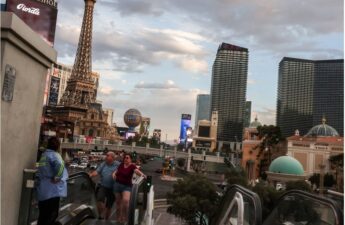
Do you remember March 17, 2020? That’s when Nevada’s governor shut down the world’s entertainment capital. The famous Strip went from full of life to empty overnight.
Empty casino floors looked like a sad Broadway show without an audience. Then, starting June 4th, a strategic comeback began.
MGM, Caesars, and Boyd Gaming didn’t just flip switches. They showed a masterclass in reopening. It was like watching grandmasters play chess with public health.
The summer of 2020 became a real-time laboratory. Mask mandates arrived in August, along with bar closures. Suddenly, even slot machines lost their bar-top privileges.
This reopening timeline wasn’t just about doors opening. It was a fascinating study in crisis management and consumer psychology.
Closure, limited capacity, full reopen
Nevada’s gaming capital was shut down like never before. The pandemic forced Las Vegas into a three-act drama. This changed casino operations for decades.
Act I – The Great Shutdown (March-June 2020) was unthinkable. Casinos were empty for the first time in history. Slot machines were silent, and blackjack tables were dusty.
Act II – Limited Capacity Summer (June 2020 onward) was strange. Casinos were open but only at 50% capacity limits. It was like playing alone at a slot machine.
Act III – The Uncertain Future is ongoing. The dream of ‘full reopen’ is elusive. Midweek hotel closures became common, a shocking change.
The table below shows the big differences between Vegas’ pandemic phases:
| Phase | Time Period | Capacity Restrictions | Key Challenges | Notable Impacts |
|---|---|---|---|---|
| The Great Shutdown | March-June 2020 | 100% closure | Total revenue loss | Unprecedented industry shutdown |
| Limited Capacity Summer | June 2020 onward | 50% capacity limits | Social distancing enforcement | Selective property reopenings |
| Uncertain Future | Ongoing | Variable restrictions | Bar and amenity restrictions | Midweek hotel closures |
The real tragedy was when bars closed due to health issues. It showed Vegas couldn’t avoid pandemic economics.
Revenue Path
Let’s follow the money trail. Or should I say, follow the missing money.
The summer of 2020 showed two casino worlds. Overall gaming revenue fell 40.4%. But the real story was in the split.
The famous Strip saw a 50.9% drop. Local markets, though, only fell 16.5%. Why such a big difference?
Government stimulus checks were the key. While tourists stayed home, locals had money to gamble. It was a strange economic time.
Was this real revenue or just a temporary fix? In 2020, the casino was just glad to be playing.
YoY GGR, slots vs tables, baccarat lag
2020 was a tough year for gaming revenue, but there were interesting shifts in genres. The total numbers showed a big drop, but the details were more telling. They showed how different games fared in the pandemic.
Table games suffered from social distancing. Who wants to get close to a blackjack dealer during a pandemic? But slot machines found new popularity. They offered a safe way to enjoy games alone.
Baccarat saw a huge drop in revenue, more than any other game. It wasn’t just bad luck. Travel restrictions kept high-rollers away, turning baccarat rooms into empty spaces.
Electronic table games became the surprise winners. They didn’t spread germs and didn’t judge players. Their rise showed that people preferred playing alone to being with others.
| Game Type | Pre-Pandemic Revenue | Pandemic Revenue | Change | Primary Factor |
|---|---|---|---|---|
| Slot Machines | $12.5B | $9.8B | -21.6% | Domestic play resilience |
| Table Games | $8.2B | $4.1B | -50.0% | Social distancing impact |
| Baccarat | $4.3B | $1.2B | -72.1% | International travel bans |
| Electronic Tables | $1.1B | $1.8B | +63.6% | Contact-free gaming preference |
This wasn’t just a drop in revenue. It was a big change in how casinos made money. The money came from different people playing different games. High-stakes international play disappeared, replaced by local visitors playing safer games for less money.
The divide between slots and tables showed interesting things about human behavior. Players chose to play alone over playing with others. They traded the thrill of table games for the safety of machines.
Baccarat’s big drop showed how global gaming is connected. When travel stopped, the big money disappeared. The high-roller world, built on luxury and travel, faced huge challenges.
These changes led to big changes in how casinos were set up. More machines and fewer tables became the new norm. The big shuffle of games on the casino floor had started, and it would last long after the pandemic.
Hotel & F&B Recovery
Remember that beautiful sports car that could only drive in first gear? That was the hospitality industry during the recent upheaval. Properties were running at barely 42% occupancy – a nightclub with more staff than guests.
The numbers told a brutal story. Average daily rates plummeted nearly 18% while revenue per available room crashed over 61%. Suddenly, luxury accommodations were practically giving rooms away at 1990s prices.
The real crisis? Labor shortages that turned normal operations into hospitality apocalypse survival. Properties that typically employed thousands were running on skeleton crews.
And the food? That glorious monument to American excess became a sad, modified shadow of itself. Watching restaurants adapt was like seeing a gourmet chef try to make microwave dinners fancy.
This wasn’t just business disruption. It was a masterclass in operational triage during unprecedented labor shortages.
ADR step-ups, staffing, hours
Remember when hotels made money from rooms? The pandemic changed that fast. Average Daily Rates plummeted, making budget motels seem luxurious.
Hotels were giving away rooms, not selling them. It was a sign of desperation, not smart pricing. The usual price increases were as rare as honest politicians.
Staffing became a huge problem. With fewer guests, there were even fewer employees. Getting workers back was like herding cats in a storm. Hotels, once efficient, were now understaffed.
Operating hours were cut more than a horror movie victim’s screen time. Places that never closed now had set hours. The Palazzo’s midweek shutdown was as odd as a shark taking weekends off.
| Metric | Pre-Pandemic Normal | Pandemic Low | Current Status |
|---|---|---|---|
| Average Daily Rate | $189 | $104 | $156 |
| Staffing Levels | 100% | 42% | 78% |
| Operating Hours | 24/7 | Limited | Extended |
| Midweek Closures | None | Common | Rare |
This wasn’t just about saving money. It was about survival. Hotels chose to operate at a lower capacity to avoid losing more money. It was a simple math problem: lose less by closing than by running at a loss.
The recovery showed something interesting. Hotels that managed staff well gained an edge. Those that found ways to do more with less came out stronger. They learned new ways to operate.
Today, things are slowly getting better but have changed forever. The days of 24/7 service may be over. And that might be a good thing for an industry that needed to change.
Consumer Mix Shift
Do you remember when the world’s jet-setters disappeared as fast as a winning streak at blackjack? The pandemic emptied casinos and changed how we visit places.
High rollers and convention goers were nowhere to be found. Instead, a new type of visitor showed up: the drive-to visitors.
Visitor numbers dropped by 65.7% between June and July 2020. But local areas bounced back fast. Why? I-15 traffic fell by only 16%, while air travel plummeted by 70.2%.
Four-hour drives from California became the new luxury. Younger people came, bringing stimulus checks and big spending habits.
It was like watching a natural selection of visitors. When flying was out, driving to gamble closer to home became the new norm. That’s loyalty.
Drive-to/domestic vs international
Las Vegas saw a huge change in visitors, like the Rat Pack days. International visitors almost disappeared. Airport traffic from abroad dropped from 7.4% to just 0.2%.
The drive-in market from nearby states became Vegas’ savior. People from California, Arizona, and Utah kept the lights on. These weren’t the big spenders casinos usually look for.
Instead, casinos welcomed “minnows with stimulus checks.” It was a strange sight. California’s rules made things even more odd.
Visitors from Nevada’s biggest market had to self-isolate after returning. It was a weird rule. Gamble for 72 hours, then quarantine for 14 days.
The domestic market saved Vegas’ economy. But it was like swapping filet mignon for spam. It keeps you going, but you miss the better stuff.
This change showed Vegas’ strength. When international visitors stopped coming, locals stepped up. They showed that help can come from close by, not far away.
Structural Changes
Imagine doing open-heart surgery on someone who’s trying to play blackjack. That was the entertainment scene here.
Convention centers went dark. The whole events world just disappeared. MGM even laid off its entire entertainment team.
The aquatic show, Le Rêve at Wynn, closed for good. It showed that some shows can’t survive a pandemic.
But something interesting was happening underground. A strong pent-up demand was growing. It was like the pressure in a shaken champagne bottle.
People weren’t just missing the tables. They were missing the whole idea of escape this city offers.
And through it all? The cranes kept moving. Resorts World and Allegiant Stadium were built from the ground up.
Here, we keep building, even through big challenges. It’s like they’re just minor hiccups.
Events/sports era, entertainment mix
Imagine Las Vegas as a top-notch sports car without a road. That’s what the city was like during the pandemic. It was full of energy but had nowhere to go. The entertainment scene, usually buzzing, turned into a quiet ghost town.
The NHL thought about making Vegas a bubble city. Picture hockey players stuck in hotels. It was either a genius or a crazy idea, depending on who you ask. The NFL’s Raiders played their first season in empty Allegiant Stadium. It felt like a huge, expensive wedding with no guests.
Las Vegas without live shows is like a phone without apps. It’s not the same. No Celine Dion singing, no Cirque du Soleil, no magic shows. Watching casinos try to keep people apart was like a sad magic trick.
The convention business disappeared fast. Big events that filled hotels and restaurants just weren’t there anymore:
- CES – a huge tech event with over 170,000 visitors
- SEMA – the top car show
- EDC – a massive electronic dance music festival
Construction kept going on new venues like the MSG Sphere. It was ironic: building for the future while today’s venues were empty. The convention center was getting bigger, ready for events that weren’t happening.
This wasn’t just about missing shows. It was about the whole economy of Vegas. The city’s usual money makers – hotel stays, food, and more – were gone. Vegas without events was like a sandwich without filling. It just wasn’t the same.
The pandemic showed us something important. Las Vegas is more than just casinos. It’s a sports center, convention hub, and entertainment place. When those parts went away, we saw how much Vegas had grown beyond its old image.
Profitability Drivers
Let’s talk about the ultimate hustle. When the world turned upside down, profitability got a whole new definition.
It wasn’t about making bank. It was about not losing your shirt. Operators became efficiency ninjas, slicing costs with the precision of a surgeon.
The new strategy? Go after the high rollers. When you can only fill half the seats, you want that half spending like they just won the lottery.
The real plot twist? Some places actually saw their margins improve. How’s that for a twist ending?
They streamlined everything. They optimized labor. They turned crisis management into a fine art. The house always finds a way to win, even when winning just means staying in the game.
Pricing power, labor/productivity, self-service tech
Remember when Vegas could charge $50 for a watered-down cocktail and people would thank them for the privilege? That pricing power vanished faster than a high roller’s credit line during the pandemic. With occupancy rates hovering around 42%, the fundamental economics shifted from luxury pricing to survival mode.
The new reality forced operators to embrace three fundamental shifts:
- Labor productivity became the holy grail
- Technology adoption accelerated at warp speed
- Traditional revenue models underwent digital transformation
Casinos discovered they could actually do more with fewer people. The pandemic became the ultimate stress test for labor optimization strategies that had been discussed for years but never fully implemented.
The technological revolution arrived about a decade ahead of schedule. Properties rolled out thermal cameras and safety technology faster than you could say “social distancing.” But the real game-changers were the operational innovations.
Electronic table games suddenly went from niche attractions to essential components. They allowed properties to maintain gaming revenue while reducing staff exposure. The math became irresistible: one dealer could supervise multiple electronic tables instead of just one physical game.
Cashless gaming exploration accelerated from theoretical discussion to practical implementation. The industry suddenly embraced technology that players had been requesting for years. Touching chips and cash felt about as appealing as sharing a toothbrush.
The pandemic forced a level of innovation that might have taken another generation to achieve. Self-service technology became the new frontier – from mobile check-ins to digital ordering systems. Human interaction, once the cornerstone of hospitality, became a calculated risk.
This wasn’t just about surviving the crisis. It was about building a more resilient operation for whatever comes next. The industry discovered that sometimes it takes an existential threat to force evolutionary leaps that should have happened years ago.
Lessons vs Prior Cycles
Remember 2008? That was a financial earthquake. The recent crisis? That was the whole tectonic plate shifting.
Comparing these events is like matching a thunderstorm against a category five hurricane. Both involve rain, but the scale? Completely different ballgames.
The pandemic-driven downturn wasn’t just economic. It was a health scare, a social experiment, and a psychological thriller all rolled into one.
So what did we learn? First, diversification isn’t just smart—it’s survival. Properties betting everything on international visitors learned this the hard way.
Second, cash isn’t king when revenue vanishes. It’s the entire royal family. Liquidity became the ultimate lifeline.
Third, operational flexibility moved from nice-to-have to non-negotiable. The ability to pivot became the difference between staying open and closing doors.
The Nevada desert taught us that no city is recession-proof. But some are recession-resistant. And that distinction matters more than anyone imagined.
This recovery didn’t follow the old playbook. Drive-in traffic saved the day while conventions vanished. Local markets bounced back while international travel stalled.
It was like watching Vegas learn new rules while the game was being played. The house always wins? This time, the house had to reinvent the entire casino.
GFC comparison
The 2008 financial crisis was like a slow poison, while COVID-19 hit the Vegas economy like a sudden heart attack. The Great Financial Crisis was like a season of Breaking Bad – it was slow, complex, and all about money. COVID-19, on the other hand, was like Contagion – fast, scary, and all about survival.
During the 2008 recession, casino revenues fell like a leaky faucet. Each quarter, the decline was like a slow drip. But COVID-19 was like ripping the plumbing system out in March 2020. One month, you’re counting chips; the next, you’re staring at empty tables.
The recovery patterns are even more interesting. After 2008, luxury came back first because rich gamblers wanted to show they were wealthy. But after COVID-19, value and convenience led the way. People just wanted to feel normal again.
| Aspect | 2008 Financial Crisis | 2020 COVID-19 Crisis |
|---|---|---|
| Decline Pattern | Gradual quarterly decreases | Immediate vertical drop |
| Primary Driver | Loss of disposable income | Health concerns & restrictions |
| Reccovery Leadership | Luxury segment first | Value segment first |
| Psychological Impact | “I can’t afford to gamble” | “I’m afraid to leave my house” |
The main difference is that the 2008 recession was about money. People wanted to gamble but had less cash. The COVID crisis was about health – some had money but were afraid to go out.
This comparison shows that not all economic crises are the same. Vegas faces different threats, like less disposable income or health concerns. It’s not just about money; it’s about safety and mobility too.
The recovery timeline depends on what’s threatened. When money is the issue, recovery follows economic signs. But when health is at risk, recovery follows vaccine progress and public trust.
So, when someone says “this is worse than 2008,” ask them to explain. Is it slow decline or sudden shock? Both crises were tough, but they needed different responses. Casino operators were stressed for different reasons.
Long-Tail Effects
The pandemic’s effects are lasting. The Strip’s financial woes from shutdowns are like maxed-out credit cards.
Construction timelines have been completely changed. Some projects moved fast, while others stopped forever.
Behavioral changes are the most interesting. Will conventions ever come back? Has remote work killed midweek business?
This isn’t just about bouncing back. It’s about rethinking what this city means in a new world.
The house always wins. But sometimes, even the house needs a serious redecorating.
Debt, development pipeline, supply
The real high-roller rooms during the pandemic weren’t at the tables – they were in corporate finance departments. While tourists worried about blackjack hands, executives were sweating over balance sheets. The house suddenly found itself playing against the bank, and the stakes were astronomical.
Companies that entered this crisis with strong financial foundations discovered their conservative approach was the ultimate winning bet. Others faced monthly interest payments that could fund a small nation’s entertainment budget. It was like watching someone double down on a hard 20 – thrilling but ultimately painful.
The development pipeline presented Vegas’s ultimate paradox. Massive projects like Allegiant Stadium and Resorts World kept construction cranes dancing across the skyline. Because in Las Vegas, we build through everything short of biblical plagues. There’s something profoundly Vegas about opening a $4 billion resort when your existing properties are running at 25% capacity.
Supply adjustments became the necessary evil nobody wanted to discuss. Fewer rooms open. Limited amenities available. Restaurants operating with skeleton crews. Vegas found itself in the bizarre position of being simultaneously over-built and under-utilized – like owning a fleet of Ferraris during a gas shortage.
Market positioning became the industry’s great guessing game. Which changes were temporary inconveniences versus permanent shifts? The financial recovery strategies being implemented across Nevada show how seriously operators took this recalibration. Everyone was trying to read the tea leaves while the tea was stil brewing.
The smart money recognized that recovery wouldn’t mean returning to 2019. It meant building something new – something leaner, smarter, and more resilient. The companies that understood this distinction positioned themselves for the next boom cycle. Because in Vegas, the house always learns, adapts, and eventually wins again.
Forward Watchlist
Welcome to the crystal ball business, where we’re all suddenly amateur epidemiologists with spreadsheets. The traditional metrics have been tossed out the window like last night’s losing lottery tickets.
Instead of counting cards, we’re counting cases. Instead of RevPAR, we’re tracking infection rates. It’s like trying to predict the weather in a climate that’s never existed before.
Our watchlist reads like a dystopian novel plot: monitoring health policy developments, tracking traveler behavior patterns, and assessing vaccine impact on mobility. We’re watching for regulatory changes that could flip markets overnight.
The house advantage now includes guessing which restrictions lift next and when conventions might return. The only certainty? Uncertainty itself has become the new normal in this high-stakes game of prediction.
Health policies, traveler behavior
Las Vegas turned into a unique behavioral psychology lab. Health policies didn’t just guide recovery; they became the recovery itself. Remember when masks became the latest fashion trend? It was all about matching your mask to your outfit, more than matching cards in blackjack.
Quarantine rules were like playing Russian roulette for the vacation industry. Who wanted to risk two weeks of isolation after a Vegas weekend? It felt like winning big but then owing the IRS everything.
Testing rules became the new resort fee, a necessary step before fun. Vaccination policies split visitors into two groups. Some saw them as golden tickets, while others treated them like bad stories.
The biggest change was in how people felt about safety. Younger travelers came back first, seeing health measures as minor hiccups. Older visitors, on the other hand, saw the casino floor as a biohazard zone.
Plexiglass barriers became key in casino design. They separated players at tables and turned buffets into sneeze guards. Every interaction became a game of “let’s talk through glass.” Opinions were everywhere.
Traveler behavior changed from “what’s the minimum bet?” to “what’s your cleaning protocol?” Hand sanitizer stations became more popular than slot machines. Temperature checks were like the new welcome drinks.
The irony? Health policies became the new way to get perks. Instead of free rooms or show tickets, the best perks were COVID testing and vaccination speed. Vegas always finds a way to adapt, even when rules change a lot.
What Vegas Taught Us About Survival
Las Vegas didn’t just bounce back from the pandemic; it showed us how to survive. The Strip’s comeback teaches us three key lessons. Liquidity is more important than luxury, flexibility is better than perfection, and customer tastes change quickly.
The city’s rise to the top of global destinations with a 25% ADR growth shows the power of adaptation. Changes we should have made years ago, like cashless gaming and better sanitation, became essential overnight.
Vegas showed us that old tourism models needed a refresh. The pandemic pushed for innovation, making operations more resilient. Drive-to traffic and domestic visitors filled the gaps left by international visitors.
Business travel surged by 200% year-over-year, showing conferences would bounce back stronger.
The biggest lesson? Being ready is more important than guessing what will happen. Las Vegas showed it could face almost any challenge. But it also showed it had weaknesses that needed fixing.
The city learned to adapt quickly, like a pro at napping. This flexibility is key to future success. And learning to adjust fast might be the most valuable skill of all.