Ever felt that electric buzz on the Las Vegas Strip during certain weeks? The crowds are bigger, the lights seem brighter, and the energy is contagious.
This surge isn’t random. It’s the result of massive trade shows and industry gatherings coming to town. These events don’t just fill hotels—they fundamentally power the city’s financial heartbeat.
Consider this interesting fact: while visitor numbers have dipped, Nevada hit a record $15.8 billion in gaming revenue recently. This shows a “K-shaped” recovery, where high-spending business travelers are driving growth.
Think of a major convention like a rising tide. When it arrives, it lifts every boat on the Strip. This includes casino floors, luxury suites, and world-class restaurants. We’ll break down this complex economic dance into a story you can easily understand.
Get ready to see Sin City from a new angle. We’ll look at it through the eyes of business travelers with expense accounts and a taste for adventure. Let’s dive in!
Convention Calendar: Major Events and Gaming Revenue Correlation
Imagine Las Vegas’s calendar as a financial forecast, painted by the world’s largest trade shows. The city’s rhythm is measured in convention badges and hotel room blocks, not just weekend getaways. This rhythm powers the Strip’s financial engine.
The Las Vegas Convention and Visitors Authority (LVCVA) data tells a fascinating story. Gaming’s share of visitor spending has dropped, but major events boost spending. This leads to record gaming revenue, even with fewer visitors, thanks to high-value convention attendees.
A city with 100,000 leisure tourists might see solid revenue. But replace 30,000 with 30,000 business professionals for a major tech show. The financial impact changes dramatically. These attendees come with corporate expense accounts, networking energy, and a sense of freedom after hours.
This mindset boosts casino revenue. Trade show analysis shows gaming win increases during these times. Casinos are ready for these players, knowing they bring high-quality demand.
The convention calendar is key to business tourism revenue. Events like CES, NAB, and MAGIC create revenue spikes. Hotel-casinos align their operations with this calendar:
- Marketing shifts to target corporate travelers with offers.
- Staffing levels increase on the casino floor and in premium restaurants.
- High-limit areas are ready for international visitors and executives.
Tracking this flow helps predict which quarters will shine for casino operators. The first quarter, with giant events, often sets the year’s tone. This isn’t guesswork; it’s a clear correlation in revenue charts.
Understanding the convention calendar is key to grasping Las Vegas’s economy. This trade show analysis offers a clear view of where money flows. In Las Vegas, time is money, and the clock is set by the business world.
So, when you see headlines about record gaming revenue, check the calendar. You’ll find a major convention was in town. This shows business tourism revenue fuels the Strip’s bright lights.
CES Impact: Technology Convention and International Visitor Gaming Patterns
While international travel to Las Vegas faces challenges, one event stands out: the Consumer Electronics Show (CES). It’s not just another trade show. It’s a global event that boosts the Strip’s economy. Let’s explore the CES gaming impact and what makes this crowd unique.
CES draws tech leaders, investors, and top executives from around the world. These individuals are used to high-stakes environments. They often enjoy high-stakes entertainment too. Their visit leads to a unique spike in gaming revenue.
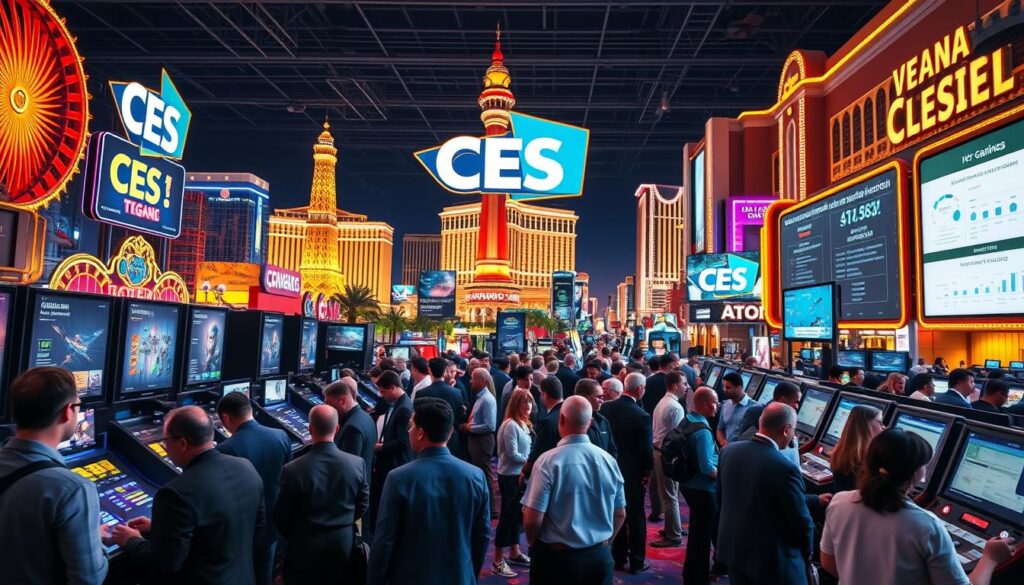
How do these visitors gamble differently? Domestic tourists might spread their money across various activities. But CES attendees focus on games that seem more complex. They prefer table games like baccarat and blackjack, which require strategy and social interaction.
Their spending is about high-end entertainment, not just casual fun. Casinos know these guests value privacy and premium service. They prepare to offer them a unique gaming experience.
| Gaming Aspect | CES International Attendee | Typical Domestic Leisure Tourist |
|---|---|---|
| Primary Game Preference | Table Games (Baccarat, Blackjack) | Slot Machines & Casual Table Games |
| Wager Profile | Larger, calculated bets | Smaller, budgeted bankroll |
| Motivation | Business entertainment, sophistication, status | Recreation, fun, escapism |
Currency exchange also plays a role in their spending. A strong US dollar makes trips more expensive for visitors from abroad. Casinos offer special deals to make their visit worth it, despite the exchange rate.
Understanding this is key for a thorough trade show analysis. The CES effect shows that not all visitor surges are the same. By studying the demographics and motivations of attendees, we can predict gaming revenue patterns. This January event is a prime example of targeted, high-value tourism.
NAB Show Analysis: Media Industry Convention and Spending Behavior
The media and entertainment industry meets in Las Vegas each spring at the NAB Show. This event boosts business tourism revenue significantly. Unlike CES, which focuses on gadgets, NAB highlights the people behind the content. This shows Las Vegas’s growing economy beyond gaming, with media being a key player.
Who attends? It’s a mix of broadcast executives, documentary filmmakers, and streaming platform developers. They value creativity and connection. For them, deals are made through shared experiences, not just meetings.
Their spending habits are unique. They often use expense accounts for client entertainment in Vegas. This can include fine dining and high-stakes gaming. The NAB Show revenue increase comes from these meaningful gaming experiences, not just casual play.
So, why are they so important to casinos? Here’s why:
- They are Creative Networkers: Building relationships is key to their business. A night out is part of their workday.
- They Have Discretionary Budgets: Their budgets allow for premium experiences, like bottle service and VIP games.
- They Appreciate Tailored Experiences: They enjoy events and atmospheres that feel exclusive and relevant to their industry.
Imagine a film producer wanting to impress an investor. A curated evening with a show, meal, and sportsbook visit is perfect. This mix of business and pleasure is what they value.
For casinos, understanding this is vital. They host exclusive parties, ensure sportsbook facilities are top-notch, and train staff to spot content creators. This focus on attendee behavior helps analyze Vegas revenue streams and stay ahead in the economy.
In essence, the NAB Show turns the Strip into a hub for deal-making. The final scene often plays out at the gaming tables. This business tourism revenue shows how Las Vegas’s conventions drive targeted and profitable activity.
MAGIC Fashion Week: Apparel Industry and Gaming Preferences
MAGIC Fashion Week turns the Las Vegas convention center into a style hub. But, it’s the gaming floors that show what this crowd really spends on. This event shows how Las Vegas has grown beyond just slots and cards.
Who are these people? They’re buyers, designers, and brand leaders. Their spending habits are key. After a day of fashion, they enjoy social and fun gaming.
They often play craps together. It’s a game of excitement and friendship, great for celebrating. They also like new slot machines with cool themes and extra features. It’s more about the fun than winning big.

This makes convention center gaming unique. It’s different from intense poker rooms. It’s all about the group fun. The fashion crowd sees the casino as part of their networking.
What does this mean for the big picture? A good trade show analysis looks at more than just room bookings. It sees the impact of spending. MAGIC shows that gaming revenue comes from different groups, not just traditional gamblers.
This smart move is why MAGIC trade show keeps growing in Las Vegas. The city has top convention spaces and entertainment nearby.
MAGIC Fashion Week adds color to Las Vegas tourism. It shows that when everyone finds their own fun, everyone wins. The fashion world gets its showcase, and the Strip gets a loyal crowd.
Corporate Entertainment: Client Gaming and Business Expense Account Spending
While crowds fill convention halls, a different business happens at high-limit tables and private salons. This is corporate entertainment, where deals are made and relationships grow with each spin or card turn.
For many, entertaining clients is key in Las Vegas. The casino floor is like a meeting room. This boosts business tourism revenue and has its own financial rules.
The main rule? The budget comes from a company’s expense account. This means spending is about making relationships, not personal risk.
Casino owner Derek Stevens points out a tax change for high-level players. Before, they could deduct 100% of losses. Now, only 90% is deductible.
This change might seem small to gamblers. But for executives, it adds complexity. It can subtly alter how companies report this spending. The rules for business entertainment deductions are key to this high-stakes game.
This complexity makes this revenue stream strong. Casinos support it with suites, free play, and VIP services. They’re not just hosting; they’re building business relationships. This keeps corporate dollars flowing, even in tough times.
Consider the CES gaming impact. The convention attracts global tech buyers with big corporate cards. Their gaming is a special experience for clients. This pattern happens at other major shows, making the Strip’s financial base strong year after year.
International Conventions: Global Attendee Gaming Behavior and Currency Impact
The global appeal of Las Vegas trade shows adds a complex layer to gaming revenue. This is heavily influenced by the world’s currency markets. Domestic visitors provide a steady base, but conventions like the NAB Show and CES attract a significant international crowd.
Their spending at the tables isn’t just about entertainment budgets. It’s a direct function of exchange rates.
You can think of it like this. When the US dollar is strong, your vacation money goes further overseas. For a visitor from Europe, Canada, or Asia, the opposite is true. Las Vegas becomes more expensive before they even place a bet.
This isn’t a minor detail. It’s a major factor in convention center gaming revenue.
Casino owner Derek Stevens highlighted this challenge perfectly. He noted that a strong dollar makes Vegas pricier for international guests, like Canadians. When their dollar buys 40% less, they might reconsider the trip.
To combat this, his properties ran an “at par” promotion. This meant Canadian dollars were accepted at a 1:1 rate with US dollars, effectively giving them a discount.
This clever move reveals a key strategy. Casinos actively work to neutralize currency friction. But what’s happening in the visitor’s mind? Do they gamble more to “win back” the value lost to a bad exchange rate? Or do they tighten their budgets?
Let’s explore the psychology. Some high-rolling international attendees might see gaming as a chance to offset costs. The idea is that a big win could erase the sting of a poor exchange rate. For others, cost-conscious business travelers, a strong dollar leads to more conservative play. They might stick to lower-stakes games or avoid the casino floor altogether.
This dynamic directly affects the total NAB Show revenue footprint. A convention with a large international delegation during a period of weak foreign currencies will see a different gaming profile than one dominated by Americans.
To make this clearer, here’s a breakdown of how different currency scenarios play out on the casino floor:
| Currency Scenario | Attendee Psychology & Behavior | Casino Counter-Strategy |
|---|---|---|
| Strong US Dollar | Perceived higher trip cost. Gaming is seen as more expensive. Behavior trends toward caution, with lower average bets and shorter sessions. | Implement “at par” or discounted exchange promotions. Offer event-specific player club points. Market premium non-gaming amenities (shows, dining) to capture spend. |
| Weak US Dollar | Increased purchasing power creates a “play with house money” feeling. Attendees are more likely to explore higher-limit games and extend their playtime. | Capitalize on the favorable mood. Host high-limit international player tournaments. Ensure multilingual staff and signage are prominent to enhance comfort. |
| Active Parity Promotions | Removes the mental barrier of exchange loss. Attendees feel valued and are more likely to allocate their original budget directly to gaming, viewing it as a “fair” deal. | Heavily promote the offer in key international markets pre-convention. Train cage and marketing staff to explain the benefit clearly. Track the play of promoted groups closely. |
So, what’s the big takeaway for understanding Las Vegas economics? You can’t just count convention badges. You have to look at the passports and the forex rates. A thriving international convention schedule is a huge asset.
But its full convention center gaming revenue is only unlocked when casinos smartly manage the currency variable.
By using tactics like Stevens’s promotion, resorts turn a weakness into a loyalty-building opportunity. They ensure that global business travelers feel welcome to play, no matter what the financial headlines say. This complete picture is essential for anyone analyzing the true economic impact of trade shows on the Strip.
Weekday vs Weekend: Business Travel Gaming Patterns vs Leisure Tourism
The financial health of a Las Vegas resort isn’t just about weekend jackpots. It’s also about the steady flow of business tourism revenue during the week. This mix keeps the Strip’s energy high all week.
Weekdays are for focused, business-like gaming. Weekends are for fun and spontaneity. Together, they make sure casinos are always busy.
Weekday players are often at conventions. They have tight schedules. After meetings, they enjoy gaming and networking.
These players play intensely but briefly. A two-hour blackjack session is typical. They aim to have fun within their business trip.
Events like the Consumer Electronics Show (CES) show this well. The CES gaming impact is huge. It fills hotels from Sunday to Thursday, boosting casino revenue.
Weekend tourists, on the other hand, are on vacation. They play longer and more relaxed. A Saturday afternoon by the pool might lead to a long slot session.
They spend money on shows, dining, and gaming. Their vibe is about escape and experience, not just a break.
Let’s compare these two groups. The table below shows the differences.
| Attribute | Weekday Business/Convention | Weekend Leisure Tourist |
|---|---|---|
| Primary Pattern | Fills Sunday-Thursday slots | Peaks Friday-Sunday |
| Gaming Style | Focused, shorter sessions (evenings) | Sustained, varied sessions (all day) |
| Spending Focus | High-value table games, quick slots | Broader resort spending (dining, shows) |
| Key Driver Example | CES gaming impact & other major shows | Holidays, summer vacations, festivals |
Why is this mix good for casinos? It brings financial stability. Weekends are always busy. Weekdays add a bonus with conventions.
This bonus smooths out revenue. It ensures hotels are full on Tuesdays. It keeps restaurants busy on Wednesdays. The goal is steady business tourism revenue all week.
Resorts aim for both. They host tournaments for conventions mid-week. On weekends, they offer family entertainment packages. This keeps the Strip lively all the time.
These two groups don’t compete. They work together. Business travelers provide the base. Leisure tourists add the excitement. Together, they make the Las Vegas Strip a success.
Group Bookings: Convention Block Hotels and Guaranteed Gaming Volume
The magic of a big trade show for a casino hotel starts before anyone arrives. It’s in the deal-making for room blocks. This secret process secures profits.
When a huge event like CES or the NAB Show books rooms, hotels commit many rooms. It’s not just about filling rooms. It’s about getting a captive, high-value audience right in your hotel.
From the casino’s view, a room block means a known number of people. These are folks with money to spend who must pass by the casino to get to their rooms or other places. You get a steady flow of possible players.
This certainty changes how the casino runs. Knowing how many people will play lets you staff right. It helps plan for food and drinks. And it lets marketing teams create special offers for this group.
Not all hotels benefit the same way. A detailed trade show analysis shows a clear pattern. Hotels near the convention center, and the official host hotels, see the biggest jump in play.
Guests at these hotels have a short walk to the casino. This means more time to play. It shows how location boosts convention center gaming earnings.
Let’s look at how different hotels make the most of convention business. Here’s a table showing the usual impact:
| Hotel Type | Proximity to Venue | Room Block Size | Gaming Impact Level | Primary Advantage |
|---|---|---|---|---|
| Official Host Hotel | On-site or Connected | Very Large (1,000+ rooms) | Extremely High | Total guest capture; multiple daily casino pass-throughs. |
| Adjacent Casino Resort | Across the street | Large (500-1,000 rooms) | High | Superior convenience; competes directly with host hotel. |
| Nearby Strip Property | 5-15 minute walk | Medium (200-500 rooms) | Moderate | Attracts overflow crowds; benefits from general foot traffic. |
| Off-Strip Partner Hotel | Shuttle ride away | Small to Medium (50-300 rooms) | Lower | Value pricing; captures budget-conscious attendees. |
The host hotel has the biggest edge. They turn their whole place into a convention hub. Every trip to get a coffee, lunch, or dinner goes by their slots.
For casino owners, this steady flow from group bookings is key. It makes gambling more stable and predictable. The convention doesn’t just bring people; it brings players ready to gamble.
Economic Sensitivity: Convention Attendance and Economic Cycle Correlation
Let’s look at the big picture. Economic downturns hit tourism hard. But, convention-driven gaming shows surprising strength. This comes from the nature of business tourism revenue.
Imagine a “K-shaped” economy. Here, higher-income people keep spending, even with inflation. Convention attendees usually fit this profile. Companies invest in trade shows to find new clients and close deals, even in tough times.
This dynamic creates a buffer. Events like the NAB Show bring media professionals with big budgets. Their spending on hospitality and entertainment boosts NAB Show revenue and casino floors. Business tourism revenue doesn’t disappear in a slump. It changes.
The total number of conventions might drop. But, the spending power of attendees is key. This relationship helps keep Las Vegas gaming stable through economic cycles. It’s a complex dance between business travel and leisure.
Understanding this completes our journey. Major trade shows do more than fill hotels. They bring a resilient stream of visitors who support the Strip’s financial health all year. Bringing people together to work—and play—proves to be a powerful economic engine.