Welcome! Have you ever walked through a busy casino and wondered where the real money is made? You’re in the right place to find out.
We’re exploring a key question in the industry. How do card games and those flashing machines really compare in making money? It’s like comparing a busy restaurant to a high-volume coffee shop. Both are important, but they work in different ways.
Let’s look at the big picture. Data shows that in many places, slot machines are the workhorses, making a huge part of the gaming income. We’re talking up to 85%! This sets a key baseline for our performance metrics comparison.
On the other hand, the tables offer a different kind of value. They rely on social interaction and the excitement of high-stakes play. By the end of this, you’ll have a clear view of the starting line in this financial race.
Player Behavior Analysis: Demographics and Game Preference Patterns
Casino revenue isn’t just about the games. It’s about the people who play them. Who are these players? What do they like? And how does it affect slot machine earnings and table game profits? Let’s take a closer look.
Think of a casino’s customers like a bustling city. You have locals and tourists. Each group has its own habits. Our data shows locals in places like Las Vegas often prefer certain machines.
Locals tend to like penny and nickel video slots. These games let you play for a long time without spending a lot. They offer fun and value.
Video poker fans also have a strong presence. For many locals, it’s a game of skill. They feel their choices can change the outcome. Plus, the odds are better than on traditional slots.
Studies show slot machines and video poker are the most played games by locals in Las Vegas. This steady play is key to slot machine earnings.
Table games, like blackjack and roulette, attract different players. They draw tourists looking for a classic casino vibe. The atmosphere is lively, with a focus on strategy and sometimes, bigger bets.
Table games appeal to those who love strategy and social interaction. They’re a place where people come to play and socialize. This helps us understand the whole revenue picture.
To make this clearer, let’s look at a simple table. It shows how different players approach the casino floor.
| Player Type | Preferred Games | Key Motivations | Typical Spending Style |
|---|---|---|---|
| Local Residents | Penny/Nickel Video Slots, Video Poker | Extended entertainment, perceived skill, better odds | Lower per-session, but high frequency |
| Tourists & Visitors | Classic Table Games (Blackjack, Roulette), Themed Slot Banks | Social experience, “authentic” casino thrill, vacation activity | Higher per-session, but less frequent |
| Strategic/Social Players | Blackjack, Poker, Craps | Skill application, social interaction, competition | Variable, often bankroll-dependent |
| High-Frequency Gamblers | Video Poker, Specific Progressive Slots | Routine, comps (rewards), chasing jackpots | Consistent, budgeted daily/weekly spend |
Demographics like age and income shape these patterns. A retiree playing video poker daily affects slot machine earnings differently than a group of friends playing craps on a bachelor party weekend.
Understanding these preferences helps us see that revenue isn’t random. It reflects human psychology and entertainment choices. By knowing who likes what, casinos can improve their offerings, and we can better understand the financial results.
So, next time you see slot machines buzzing, remember they’re not just making noise. They’re showing the choices of thousands of players, each adding to casino profits. Knowing about player behavior is key to analyzing everything else, from profit margins to floor plans.
Profit Margin Comparison: Labor Costs vs Machine Maintenance
Imagine two ways to make money: one needs people, the other needs machines. This is the main fight on the casino floor. It’s not just about making money, but keeping what’s left after spending.
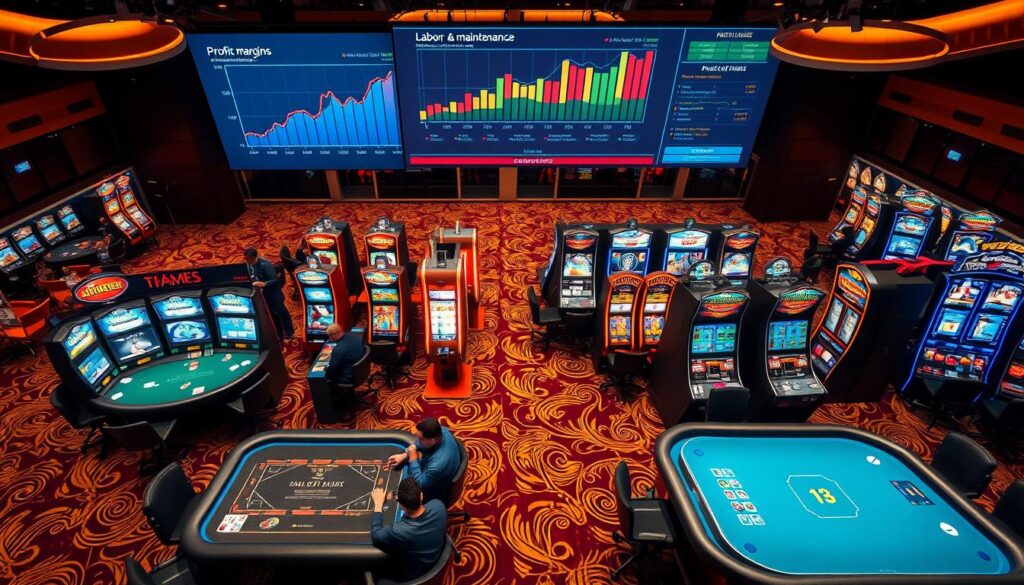
Let’s look at the costs. Table games like blackjack need a team to run. They have fixed labor costs. You pay for salaries, benefits, and training, no matter the crowd.
Slot machines are different. They cost a lot upfront but don’t need people. Their costs are mainly for upkeep and electricity. But, if a machine breaks, it stops making money until fixed.
Casinos use “hold” or “net win” to measure success. This is the percentage of money kept as profit. Slots are easy to track, but table games have to subtract the cost of staff.
Here’s a simple comparison to visualize the different cost structures:
| Cost Factor | Table Games | Slot Machines |
|---|---|---|
| Primary Expense Type | Variable & Fixed Labor | Capital & Maintenance |
| Key Cost Drivers | Dealer wages, benefits, supervision | Machine purchase, repair fees, software licenses |
| Impact of Downtime | Low (game stops, but staff are paid) | High (machine produces zero revenue) |
| Scalability | Less scalable (needs more people for more tables) | Highly scalable (add machines without adding staff) |
Choosing the right machines is key for profit. Casinos pick reliable slots that play often and break less. They place these in busy spots to make the most of them.
Table games’ profit depends on the dealer’s speed and the table’s fullness. A quick dealer can handle more hands, improving profit. A full table spreads the cost, making more profit.
So, a casino floor is a balance. The buzz of tables comes with a cost. Slots offer a steady, machine-based investment. Casinos aim to balance these to keep profits up.
Space Utilization: Revenue per Square Foot Analysis
Every square foot in a casino is valuable. It’s not the chips or machines, but the ground players walk on. To manage this, operators use a key metric: revenue per square foot.
Imagine a high-end mall. A small kiosk can make a lot of money, while a big furniture store might not. Casinos face a similar challenge.
Slot machines are like high-density apartments. They fit in a small area and make a lot of money. Table games, like blackjack, are like town squares. They need more space for players and dealers, but they create social clusters.
| Game Type | Avg. Space Required | Revenue Density Potentia | Player Social Experience | Key Consideration |
|---|---|---|---|---|
| Slot Machines | 50-75 sq ft (modern) | Very High (steady volume) | Mostly Solo | High machine uptime is critical. |
| Table Games (e.g., Blackjack) | 200-300 sq ft (with seating) | Variable (depends on players) | Highly Social | Requires dealer labor and active players. |
| Roulette Wheel | 250-400 sq ft | Can spike with crowds | High-Energy, Group Focused | Acts as a floor anchor and attraction. |
For years, casinos packed in as many slots as they could. But in 2020, a big change happened. Now, each machine has 50 to 75 square feet of space.
This might seem odd. More space means fewer machines, right? But, the data shows it actually increases revenue per active machine. It’s because people prefer comfort and space. A crowded area feels stressful, while a well-spaced area feels luxurious.
Operators also use this strategy to “prune the floor.” They remove underperforming games and spread out the strong ones. This makes the area more attractive and boosts revenue.
So, casino architects balance financial yield and human comfort. The most profitable floors today focus on both. By optimizing revenue per square foot, operators create spaces where everyone feels like a winner.
Peak Hours Performance: Table Games Social Aspect vs Slot Consistency
Looking at casino game performance is more than just numbers. It’s about seeing how money flows every hour. The casino floor changes a lot, from quiet mornings to busy nights. This shows the big difference between table games and slots.
Table games thrive on people. A lively craps table or a full blackjack game pulls in more players. In busy times, like evenings and weekends, this social vibe boosts their earnings. A blackjack table can make most of its money in just a few hours when it’s packed.

Slots, though, are always ready for players. They don’t rely on crowd energy but on being always available. Yet, they also see big earnings when the casino is full. More people mean more chances to play.
So, which is better? It’s not that easy. Think of it as “peakiness” versus steady earnings. A high-limit blackjack table has huge earnings during busy times but slow periods. A popular slot machine earns steadily, with a bigger peak when the casino is full.
Knowing these patterns is key for casinos. This info helps make important decisions:
- Staffing: More dealers for table games during busy times.
- Promotions: Happy hours or slot tournaments during slow times.
- Machine Placement: Place top slots where people walk by during busy hours.
By using time-of-day analytics, casinos can make better choices. They can match their offerings to when guests are most active. This turns peak hours into a way to improve casino game performance.
High Roller Impact: VIP Table Games vs High-Limit Slots
A small group of elite players can make a big difference in casino profits. These high rollers spend a lot, even though they’re a small part of the guests. Casinos need to focus on these big spenders to make more money.
High rollers choose between VIP table games and high-limit slots. Both offer unique experiences.
For high rollers, the experience matters a lot. VIP table games like baccarat or blackjack offer a special atmosphere. They get personal service and feel important.
The table games revenue comes from these special experiences. Players bet big, and the total amount wagered can be huge. This creates a loyal customer base.
The Thrill of the Solo Pursuit: High-Limit Slots
High-limit slots offer a different thrill. These machines have high minimum bets, from $10 to $100 per spin. Players aim for a big jackpot win.
These machines can make a lot of money for casinos. They don’t need a dealer and can run all day. The chance for a big win is the main attraction.
How Casinos Roll Out the Red Carpet
Casinos go all out for high rollers. They use 5% to 10% of the floor for these areas. It’s not just about the space, but what’s in it.
- Privacy and Comfort: Separate rooms or secluded areas with luxurious seating.
- Superior Service: Dedicated attendants, concierge services, and private lounges.
- Exclusive Perks: Complimentary amenities, personalized offers, and invitation-only events.
This special treatment makes high rollers feel valued. It encourages them to play longer and spend more.
Comparing the Revenue Potentia
Which one makes more money? The answer is not simple. Both are important for different reasons. Let’s compare their key features:
| Feature | VIP Table Games | High-Limit Slots |
|---|---|---|
| Required Floor Space | Larger (needs room for tables, dealers, players) | More compact (machines can be placed closer together) |
| Average Bet Size | Extremely High ($500+ per hand common) | High ($25-$500 per spin) |
| Revenue per Square Foot | Potentially very high, but labor-intensive | Consistently high with lower overhead |
| Primary Player Appeal | Social prestige, skill, personalized interaction | Privacy, speed, massive jackpot potencial |
VIP table games can make more money per player. But they need more staff and space. High-limit slots are more efficient but offer less variable cost. Casinos should have both to attract different high rollers.
The best strategy is to offer a complete high-stakes experience. A player might play blackjack for fun and then try slots for a big win. Top-tier service in both areas helps capture the high roller’s wallet.
Attracting high rollers is about more than the games. It’s about creating an experience that feels royal. Whether it’s a card game or a slot machine, the feeling of being special drives the biggest revenue.
Technology Evolution: Electronic Table Games and Advanced Slot Features
The casino floor is changing, thanks to technology. Gone are the days of just dealers and dice. Now, microchips and multimedia are leading the way. This change is making games more exciting and boosting earnings.
Video slots today are far from simple. Aristocrat’s Lightning Link series is a prime example. It’s a hit because of its engaging features and interactive mini-games. These elements keep players hooked, leading to more bets and longer playtime.
Players love the stories and the thrill of winning big. This keeps them playing for hours. Casinos win too, thanks to these advanced features.
Electronic Table Games (ETGs) are another big change. They offer digital versions of classic games like roulette and blackjack. These games feel live but don’t need a dealer.
ETGs are popular because they’re easy to start with. They have lower bets and no pressure from other players. This attracts new players, making casinos more diverse and appealing.
ETGs and advanced slots are changing the game. They mix the best of both worlds. ETGs bring table game strategy to machines, while slots add depth and interactivity.
This mix creates new ways for casinos to make money. It meets the needs of today’s players, who want digital experiences. This keeps the casino floor fresh and profitable.
So, when you see ETG terminals or hear slot sounds, think about the tech behind it. It’s the engine that’s making casinos more money than ever.
Operator Strategies: Floor Plan Optimization for Maximum Revenue
Casino operators don’t leave revenue to chance—they engineer it through sophisticated gaming floor optimization. They turn square footage into profit centers. It’s not about random placement; it’s a science that uses data to make every decision count.
At the heart of this strategy lies performance analytics. Operators track each machine’s “coin-in,” “win per unit,” and occupancy rates in real time. Underperforming games don’t get second chances—they’re quickly relocated or replaced. This creates a living floor plan that evolves with player preferences, ensuring every slot and table earns its keep.
One clever tactic is creating “trial” areas for new machines. These zones allow operators to test games without major commitment, gathering valuable data on player response. It’s like a laboratory within the casino, where future hits are discovered before they’re rolled out across the entire floor.
Traffic flow receives special attention. Gone are the rigid grid layouts of the past. Modern floor plan optimization uses organic clusters and pods that guide players naturally. Wide aisles (often exceeding 50 square feet per machine) prevent congestion and create comfortable spacing. This fluid design encourages exploration.
Placement follows psychology. High-demand machines are strategically positioned along natural walking paths—the casino equivalent of putting milk at the back of a grocery store. Popular “anchor” games like Wheel of Fortune slots act as magnets, drawing players into specific areas where they’ll discover other games along the way.
The sensory experience is equally calculated. Lighting patterns, carpet designs, and even ceiling heights work together to subconsciously guide your journey. Brighter areas around new games, comfortable seating clusters, and deliberate soundscapes all extend your stay. Every element whispers, “Stay a little longer.”
Here’s what today’s most successful operators focus on:
- Data-Driven Decisions: Removing emotion from placement, using hard metrics to determine what stays and what goes
- Fluid Navigation: Creating natural pathways that feel intuitive
- Strategic Anchoring: Placing proven performers to create traffic hubs throughout the floor
- Comfort Engineering: Ensuring adequate personal space reduces player fatigue and increases play time
- Dynamic Adaptation: Treating the floor plan as a living document that changes with seasons and trends
The ultimate goal? Creating a seamless journey where you move effortlessly from one gaming opportunity to the next. This gaming floor optimization maximizes revenue from every square inch while making your experience feel natural and enjoyable. It’s the invisible hand that guides your casino adventure, ensuring both you and the house come out winners.
Remember, next time you’re wandering a casino floor, you’re not just following your instincts—you’re navigating a carefully crafted revenue map. Every turn, every machine cluster, every wide aisle represents a calculated decision in the complex puzzle of maximum profitability.
Sports Betting Integration: Impact on Traditional Gaming Revenue
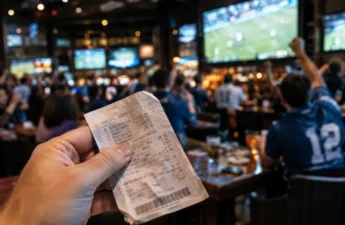
Today, casinos wonder if sports betting helps or hurts their slot and table game earnings. Legal sports betting has added a new layer to casinos. It’s not just another game; it’s a new form of entertainment that appeals to many fans.
This change makes us look at player preferences in a new way. Studies have long studied how different betting types compete for the same money. Now, with sportsbooks everywhere, this competition is clear.
So, what happens? There are two main scenarios, and both are happening right now.
The first is the halo effect. A guest comes in to bet on the big game. While waiting, they grab a drink and try a slot machine. Sports betting brings in new people to the casino floor.
The second scenario is cannibalization. A regular slot player moves some of their money to sports betting. They spend less time and money on slots. This takes money away from traditional games.
Understanding this balance is key for casino management. Operators must ask if they’re getting new customers or just moving money around. The answer lies in analyzing player preferences and spending habits.
Smart integration is the answer. It’s about making the sportsbook and gaming floor work together seamlessly. This means more than just placing bars near betting screens. It’s about digital links through apps that make it easy to move between sports betting and casino games.
Data from Nevada shows a complex picture. For example, a record revenue year showed sports betting grew, but slots and tables made most of the money. This suggests they can coexist. Also, breaking down the gaming revenue segments on the Las Vegas Strip shows how different products contribute to the whole.
To visualize the strategic considerations, let’s break down the impacts:
| Impact Type | Description | Effect on Traditional Gaming | Key Operator Strategy |
|---|---|---|---|
| Halo Effect | Sports betting attracts new, younger demographics who may then explore slots and tables. | Net Positive. Increases overall foot traffic and total wallet share. | Design open floor plans that connect sportsbooks visually and physically to high-traffic slot zones. |
| Cannibalization Risk | Existing players reallocate a fixed entertainment budget from slots/tables to sports wagers. | Net Negative. Can reduce time and spend on legacy machines and games. | Create combined loyalty rewards and promotions that incentivize play across both product types. |
| Event-Driven Synergy | Major sporting events create peak crowds that boost all adjacent gaming and dining. | Highly Positive. Creates surges in revenue across the entire property. | Develop special event packages and high-limit betting areas that cater to the premium sports crowd. |
| Digital Channel Blending | Mobile apps allow players to switch between sports betting and casino games instantly. | Variable. Can deepen engagement with versatile players but may isolate home-based users. | Invest in a unified digital platform that offers a single wallet for all betting forms, tracking player preferences across the board. |
The ultimate goal is to build a complementary ecosystem. You want your sportsbook to be a gateway to more fun, not a separate entity. By understanding how player preferences are changing, operators can make sports betting a team player that boosts the whole property’s success!
Future Trends: Skill-Based Gaming and Next-Generation Casino Technology
The casino floor is about to change a lot. New innovations are coming to attract a new crowd.
Skill-based gaming is a big trend. Imagine slot machines that feel like video games. They mix luck with how well you play. This appeals to people who love gaming on consoles and PCs.
This change might alter the house edge. It makes casino games more interactive.
New tech goes beyond new games. Artificial intelligence and machine learning analyze player data live. This means offers and game suggestions are super personalized. Cashless betting systems make play faster and safer. Augmented reality could soon add digital layers to real tables.
These tools aim to make games more engaging. They help casinos use every inch of space better. The goal is to give each guest a perfect experience.
What does this mean for the classic debate between tables and slots? These trends might mix them together. A skill-based game could offer the excitement of a table game but faster. Advanced analytics make sure the right game is in the right place at the right time.
The push for better casino games is driving this tech race. We’re heading towards a smarter, more fun casino experience for all.