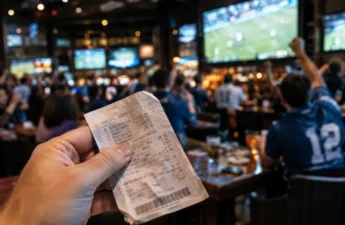

The World Cup is not just a soccer tournament.
For Las Vegas, it is a 39-day stress test of sportsbook capacity, international fan behavior, mobile wagering demand, food and beverage throughput, and the Strip’s ability to convert global attention into measurable resort margin.
The 2026 FIFA World Cup will be the largest edition in history, expanding to 48 teams and 104 matches across the United States, Canada, and Mexico. Las Vegas is not a host city, but that may not matter as much as it once did. The modern Strip does not need the stadium to own the economic spillover. It needs the screens, the sportsbooks, the hotel rooms, the hospitality packages, and the fan density.
That is where the margin question begins.
Can global World Cup betting volume lift Las Vegas sportsbook revenue in a way that strengthens broader Strip economics? Or will the tournament generate visible handle without enough hold, cross-spend, or operating leverage to materially move margins?
The answer depends on whether operators treat the World Cup as a betting event or as a full resort monetization cycle.
Why World Cup Volume Is Different From Domestic Sports Demand
Las Vegas sportsbooks are built around volume. NFL weekends, March Madness, UFC cards, and major boxing nights already create intense betting windows. But the World Cup behaves differently because it stretches across time zones, national identities, and daily match cycles.

The tournament is not one peak day.
It is a rolling calendar.
That creates a different revenue pattern. Instead of one compressed weekend like the Super Bowl, the World Cup gives operators repeated chances to capture morning traffic, afternoon wagering, international fan groups, repeat food and beverage spend, and mobile sportsbook engagement.
This matters because sportsbook revenue in Las Vegas is not simply about handle. Handle is the headline number. Margin lives in hold percentage, customer acquisition cost, operating expenses, and the amount of non-gaming spend attached to each betting session.
A packed sportsbook with low hold can look impressive on television and still underperform financially. A smaller crowd with premium seating, food minimums, drink packages, and multi-match retention may produce better economics.
The World Cup gives the Strip something rare: a global sporting event with enough duration to test both models.
The Sportsbook As A Hospitality Engine
The old sportsbook was a wagering counter with screens.
The new sportsbook is a theater.
During a World Cup cycle, that distinction becomes essential. Fans are not simply placing wagers and leaving. They are gathering, watching, eating, drinking, returning for later matches, and often moving through the property before and after games.
That creates layered monetization.
The sportsbook becomes the entry point, but the margin often appears elsewhere. Reserved seating, premium viewing rooms, breakfast service for early matches, international food programming, private group packages, and post-match nightlife all become part of the revenue stack.
This is where the World Cup can support Strip margin expansion even when sportsbook hold is uneven.
If a bettor places a modest wager but spends across dining, bar service, merchandise, and hotel inventory, the resort still wins the broader revenue battle. If that same guest returns for multiple matchdays, the lifetime value of the visit becomes more important than the first wager.
That is the integrated resort logic.
Gaming starts the session. Hospitality monetizes the stay.
The 104-Match Effect On Handle And Staffing
The expanded 2026 format changes the operating equation.
A 104-match tournament means more betting opportunities, more live markets, more parlay construction, more futures adjustment, and more in-play volume. It also means more staffing pressure, more trading exposure, more screen allocation decisions, and more operational complexity.
The schedule will test whether Las Vegas sportsbooks can efficiently manage demand outside traditional U.S. prime-time sports windows.
That matters because match timing affects margin.
Morning and midday games may not produce the same crowd density as an NFL Sunday night game, but they can activate otherwise softer dayparts. For resorts, that is valuable. A hotel lobby, sportsbook, or restaurant that would normally build slowly through the day can monetize earlier when international match demand is strong.
| Revenue Lever | World Cup Impact | Margin Implication |
|---|---|---|
| Sportsbook Handle | Higher match frequency creates repeated betting windows | Positive if hold remains stable |
| Food & Beverage | Watch-party dwell time increases order frequency | Strong margin support |
| Hotel Occupancy | Traveling fans and viewing groups can lift room demand | Depends on package pricing |
| Labor Costs | Longer operating windows require staffing discipline | Risk if volume is uneven |
| In-Play Betting | More live markets deepen engagement | Higher tech and risk-management demand |
The opportunity is real, but so is the cost. A sportsbook cannot simply stay busy. It must stay efficiently busy.
That is the difference between activity and profitability.
Global Demand And The International Visitor Layer
World Cup demand is emotionally different from domestic sports demand.
A national-team match brings community behavior. Fans arrive in groups. They wear colors. They stay longer. They celebrate publicly. They seek shared viewing environments rather than solitary betting experiences.

For Las Vegas, that behavior has direct revenue implications.
International and out-of-state visitors may treat World Cup matchdays as part of a larger Strip itinerary. They are not only looking for odds. They are looking for atmosphere. That means resorts with the strongest viewing environments may capture more total spend than operators with the sharpest betting menus alone.
This is where Las Vegas visitor spending patterns become important. A World Cup fan can behave like a sports bettor, a tourist, a nightlife customer, and a hospitality buyer in the same day.
The strategic question is whether casinos can connect those identities into one property-level spend profile.
A sportsbook ticket is valuable. A sportsbook ticket attached to a two-night stay, a reserved table, and a dinner reservation is far more valuable.
Payment Speed, Mobile Behavior, And Competitive Pressure
The 2026 World Cup will also test payment expectations.
Global fans are increasingly accustomed to mobile-first wagering, fast deposits, fast withdrawals, and flexible account funding. That does not mean Las Vegas sportsbooks will suddenly operate like offshore crypto platforms. U.S. regulatory frameworks remain very different.
But customer expectations do not stop at jurisdictional borders.
As global football audiences compare betting experiences across markets, coverage of World Cup bitcoin sportsbooks betting shows how speed, flexibility, and market access are becoming part of the broader wagering conversation.
For Las Vegas operators, the lesson is not to copy unregulated models.
The lesson is to reduce friction within regulated systems.
That means smoother wallet funding, faster account verification, clearer mobile interfaces, better in-play stability, and stronger connection between sportsbook accounts and resort loyalty systems.
A slow payment experience can weaken an otherwise premium sportsbook environment. A seamless one can increase session frequency, reduce drop-off, and support more complete customer tracking.
In a World Cup cycle, friction is expensive.
Why Handle Alone Will Not Define Success
Sports betting analysis often starts with handle, but handle can mislead.
A major tournament may produce impressive wagering volume while actual sportsbook win remains modest. Soccer markets can be efficient, heavily shopped, and lower-scoring than American football markets. Draw outcomes, futures liability, and public-team exposure can all complicate margin forecasting.
That means the true World Cup revenue test must look beyond total wagers.
For Las Vegas operators, the better question is: how much total resort revenue does each betting customer influence?
A sportsbook customer who generates small direct gaming margin may still be profitable if the resort captures attached spending. This is why World Cup programming should be measured through an integrated dashboard, not a sportsbook-only ledger.
The Strip has already learned this lesson in other event cycles. Formula 1, the Super Bowl, and mega-conventions all demonstrated that premium demand often appears across multiple departments rather than inside one line item. A similar logic applies here, especially when global sports demand overlaps with tourism behavior. That broader pattern connects naturally to prior Las Vegas Strip gaming revenue analysis, where long-term performance depends on how gaming, hospitality, and visitor economics interact.
The sportsbook is the visible stage.
The resort P&L is the scoreboard.
Operational Risk: Crowds, Lines, Screens, And Live Market Load
The upside is attractive, but the operational risks are not minor.

A World Cup crowd is fragmented by country, language, match timing, and viewing preference. Resorts may need to manage simultaneous fan groups with different expectations. Some customers will want premium lounges. Others will want communal viewing. Others will primarily use mobile apps while watching from bars, rooms, or pool decks.
That complexity creates pressure on staffing, trading teams, food service, compliance monitoring, and physical space planning.
The most successful operators will not simply add more screens. They will segment the experience.
Premium fans may need reserved seating. Casual visitors may need open viewing areas. International groups may respond to match-specific packages. Mobile-first bettors may value app performance more than counter service.
A flat experience leaves money on the table.
A segmented experience increases yield.
Margin Outlook For The Strip
The World Cup is unlikely to transform Las Vegas sportsbook economics by itself.
But it can reveal which operators are best positioned for global sports demand.
The strongest performers will likely be properties that combine four capabilities: high-quality viewing environments, reliable mobile wagering infrastructure, disciplined staffing, and strong cross-property monetization.
The weakest performers may still see traffic, but not necessarily margin.
That distinction matters.
The Strip does not need every World Cup visitor to be a high-stakes bettor. It needs enough visitors to engage repeatedly across gaming, hospitality, food, beverage, and entertainment. If that happens, the tournament becomes more than a betting calendar. It becomes a resort revenue accelerator.
The 2026 World Cup will not be played in Las Vegas.
But economically, parts of it will still be contested on the Strip.